1. We Are the Substrate
The author, making the central argument.
The claim, the substrate-logic argument in three points, the Apkallu emerging from the deep waters to teach civilization. The long study, said plainly.
▼ in this chapter — 19 entries
1. We Are the Substrate
Some claims need a long approach. This one needs the opposite — to be said quickly, in a single sentence, knowing in advance that no single sentence is going to be enough. I am going to write it and accept the consequences. The reader is entitled to see the shape of the room before the qualifications close in around it.
The human species is the observed experimental population of an older, more careful intelligence. The abduction corpus is the record of that observation. We are not their vessels. We are their long study.
I have put the claim on the page before you can decide what to do with it. You may be deciding already — that what you have just read is the kind of thing a person in a tinfoil hat says at a bus stop while you politely fail to make eye contact; that I am about to defend the indefensible with the kind of laundry-list pseudo-evidence the genre is famous for; that the time has come to close the book. I would ask you not to. I would ask, instead, for ten pages. If at the end of ten I have not earned the rest, close the book with my blessing — the secondhand market for these things is generous and you will recoup most of the cost.
The claim is not small.1 I have lived with it for some years, and it has the strange property that nothing in daily life will confirm it and nothing will refute it. The world above the floorboards goes on. What I am proposing is that there has also been, for a very long time, a careful pair of eyes somewhere out of the line of sight, and that the eyes have a use for us we have not been permitted to perceive.
Two notes. Substrate in this chapter is not the word of romance — not the word for a body that another body inhabits the way a hermit crab inhabits a shell. It is the word in the microbiology paper. The substrate was inoculated; the substrate was incubated for ninety-six hours; the substrate was sampled at the intervals indicated. The medium the experiment is taking place in. The romantic reading sometimes wants to flicker up from the text; the flicker is to be resisted. We are the substrate in the laboratory sense.
And: I am going to claim the population has been observed; that the observation has, at certain transitions, become cultivation; that the procedure in the corpus is the protocol by which both are presently maintained. I am not going to claim I know what the observation is for. I do not know. I can enumerate the reasonable possibilities — pure observation; cultivation toward some morphology of social organization; specimen-banking against the contingency of our extinction; an audit station that audits us auditing ourselves — and I decline, on principle, to commit to one. The chapter is observational, not theological.
Three things to say. The order is the order of inference, not of importance — by the end we will be looking back at all three at once.
The Pleistocene boundary
Something happened on the surface of this planet at the close of the Pleistocene that the orthodox record acknowledges without explaining, and that I read as the boundary across which the experiment moved into its current phase.
The Greenland ice-core marker for the onset of the climate oscillation we call the Younger Dryas is 12,876 ± 31 years BP. The end of the Pleistocene proper, by the convention adopted by the International Commission on Stratigraphy in 2008, is 11,700 BP. Between those two figures, in a window of approximately 1,200 years, a climate oscillation of greater magnitude and shorter onset than any other Pleistocene event in the cores returned the Northern Hemisphere to glacial conditions within decades — decades, not millennia — and then exited those conditions, on a comparable schedule, into the climatic stability of the Holocene we inhabit.2 The mechanism is undersettled. Candidates include a meltwater discharge into the North Atlantic that briefly shut down the thermohaline circulation; a cosmic-impact event at the Bølling-Allerød/Younger Dryas boundary whose evidence is a layer of platinum-group elements and nanodiamonds in sediments at approximately three dozen sites across North America, Europe, and the Levant; and a solar grand minimum of unusual depth. None has dislodged the others.
The argument does not require the mechanism. It requires only that something sufficient to compress the prior human population to a small and stressed remnant happened in that window. The orthodox record has a 1,200-year discontinuity whose cause it admits it has not nailed down. The genetic-bottleneck literature, separately, has been describing for fifteen years a Late-Pleistocene compression of the human effective population to numbers low enough that the polite scientists involved have used the word near-extinction in print and declined to elaborate. The two literatures are talking about the same event. That event is the threshold across which the experimental population emerged into the conditions under which it has been observed, and at times cultivated, ever since.
I am not claiming the operators came in over the boundary; they may have been here much longer. I am not claiming the operators caused it; I have no opinion on causation. I am claiming, more narrowly, that the boundary is where the experiment became the experiment as we now understand it — a stressed remnant population, freshly available to be guided through the transition from foraging to agriculture by the small number of direct interventions for which the textual record from the immediately subsequent period contains, as I will show in a few pages, the receipt.
The residences
The operator class lives on this planet in places whose physical conditions suit them — deep ice, abyssal water, sub-cratonic basement rock. They were not, on my reading, displaced into these residences by an event that rendered the surface lethal to them; an earlier draft of this chapter argued for displacement, and the earlier draft was overreaching.3 The modest claim is what the geography supports: the operator class has long-term residence and observation sites in places whose environmental envelope is compatible with whatever its biology requires. The sites have probably been their residences for far longer than we have been a species. Whether they were ever surface-dwelling here is a question I decline to answer.
The class of long-term deep residences available to a population requiring rock-and-water-shielded conditions is small. The inventory below is the result of arithmetic, not imagination.
Lake Vostok. Two hundred and fifty kilometers long, fifty wide, sealed beneath a four-kilometer ice ceiling for somewhere between fifteen and twenty-five million years, held liquid at minus three degrees Celsius by the pressure of the ice column above it. The Russians drilled to the lake’s surface in stages between 1989 and 2012, reaching water on the fifth of February of that latter year. The Bell magnetic anomaly along the lake’s eastern coast — a rectangle of 105 by 75 kilometers, first mapped by Columbia’s Lamont-Doherty group in 2002 — is not the residence. The residence is the lake itself. The Bell rectangle is something else, and we will come to it in a later chapter; for now I will flag only that the geometry is wrong for a residence (residences are not rectangular, anywhere in the inventory) and right for an audit station.
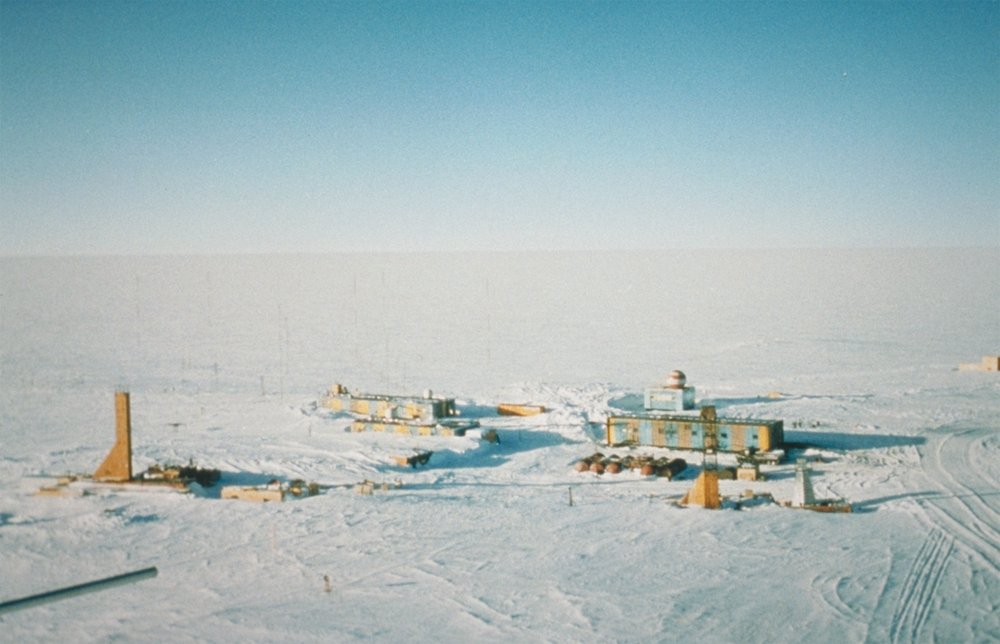
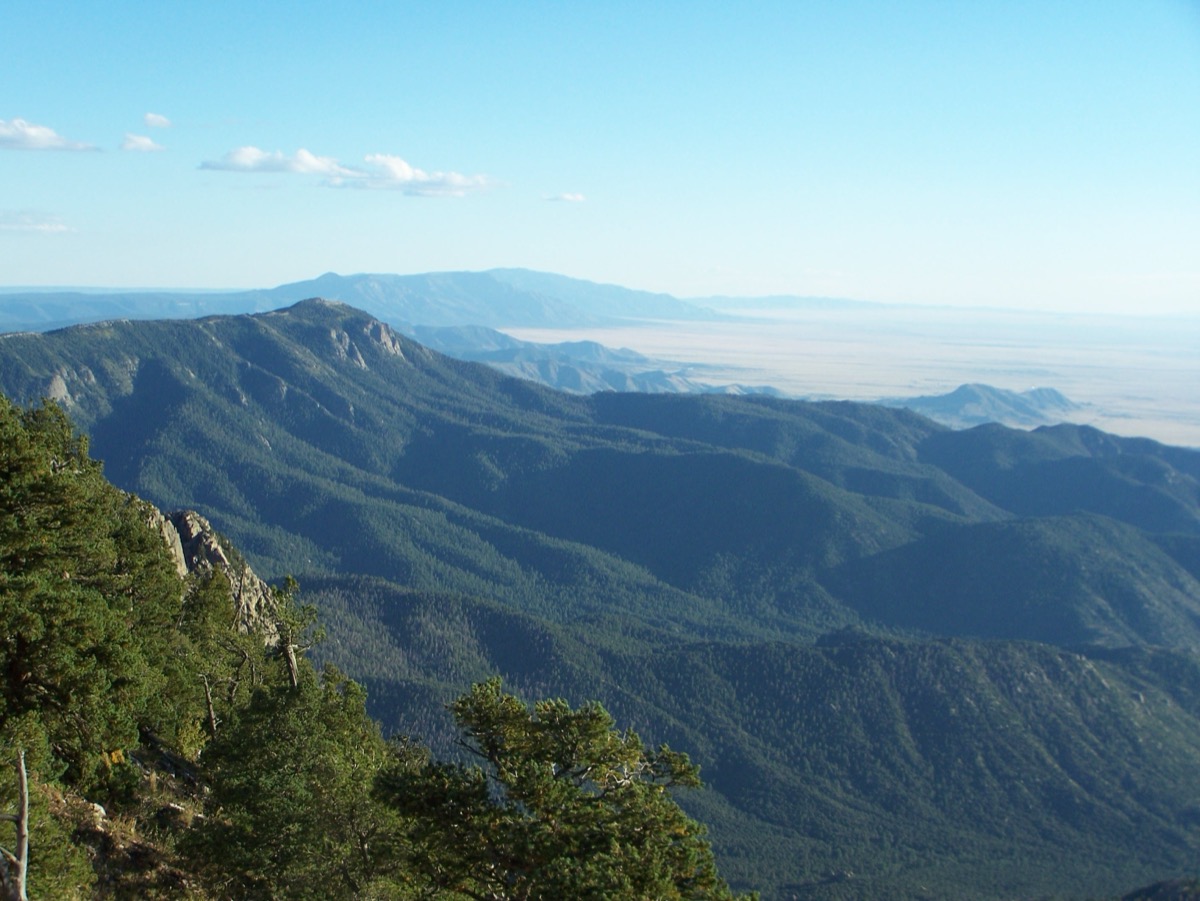
The Mariana Trench. Hadal zone; Challenger Deep at 10,935 meters; pressure at the floor approximately 1,100 atmospheres; most of the volume unmapped at all. The narrowband acoustic source designated MAR-26-013, detected on a NOAA hydrophone array in March, runs at 7.04 hertz with a duty cycle of eleven minutes on and forty-nine minutes off. The duty cycle is the precise duty cycle, to the minute, of the 1986 acoustic annex to the Bennewitz file from the Manzano monitoring period four decades earlier. A signal with that duty cycle, in 1986, was the surface signature of an operator-side carrier process in the Albuquerque rangeland. A signal with the same duty cycle, in 2026, on a hydrophone twenty thousand kilometers away, is not a coincidence; it is the same protocol, still running.
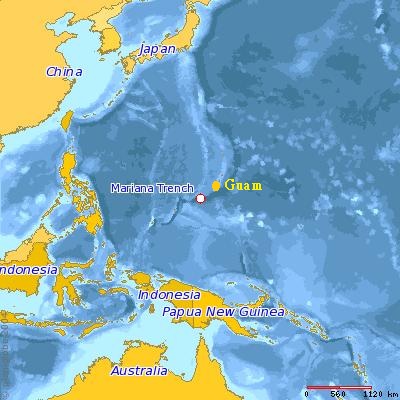
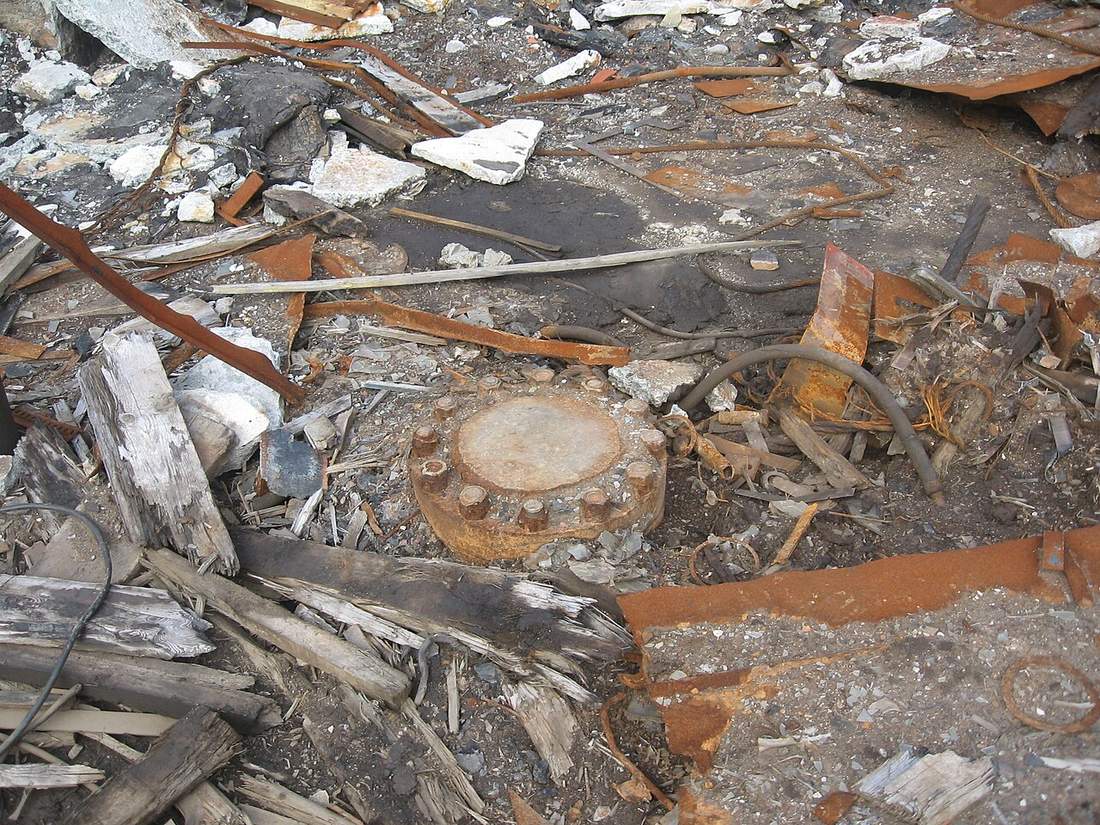
Kola. The Soviet Pechengsky superdeep borehole was drilled, between 1970 and 1992, to a measured depth of 12,262 meters in the cratonic granite of the Kola Peninsula. The drill was abandoned at that depth when the rock — at 180 degrees Celsius and a pressure regime the engineers had not anticipated — transitioned from brittle to plastic, and the borehole began to close itself by slow non-Newtonian creep. The deepest seismic profile contains a velocity-anomaly horizon between roughly 9 and 11 kilometers that the Soviet team’s published explanation — a transition from gneiss to fractured granite — describes but does not fully resolve. The hatch was welded shut in 2008. The surface complex on the tundra outside Zapolyarny has been allowed to half-collapse. There is no scientific reason for either the welding or the collapse.
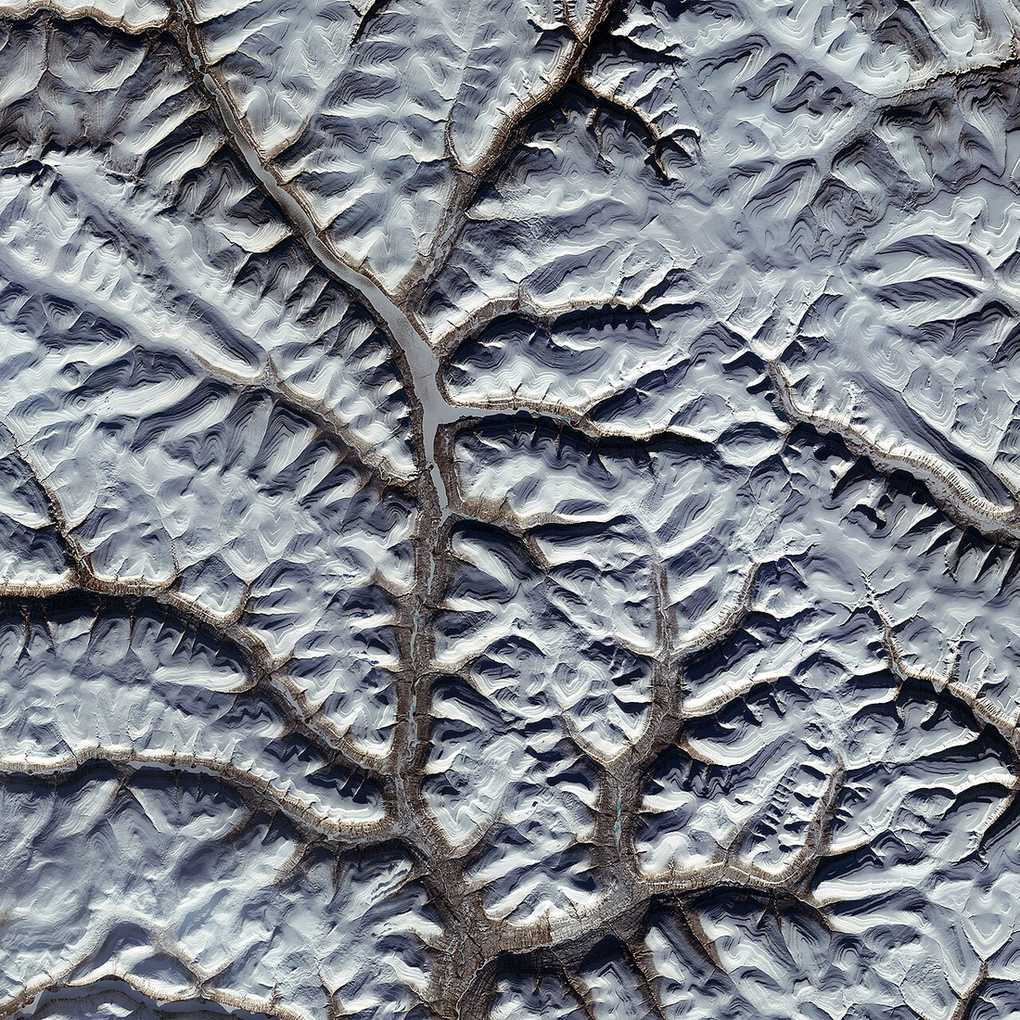
The Putorana Plateau. Eight hundred kilometers by five hundred, a basalt stack rising on average a thousand meters above the surrounding Central Siberian Plateau; twenty-five thousand lakes on top of it; Lake Vivi, the geographic center of the Russian Federation, near the middle. Access is helicopter-only across most of its area. The basalt is two and a half kilometers thick in places. The lake-bottom sediments do not have the radiogenic signature one would expect from undisturbed cratonic rock — a fact the publishing geologists have, for decades, declined to know what to do with.
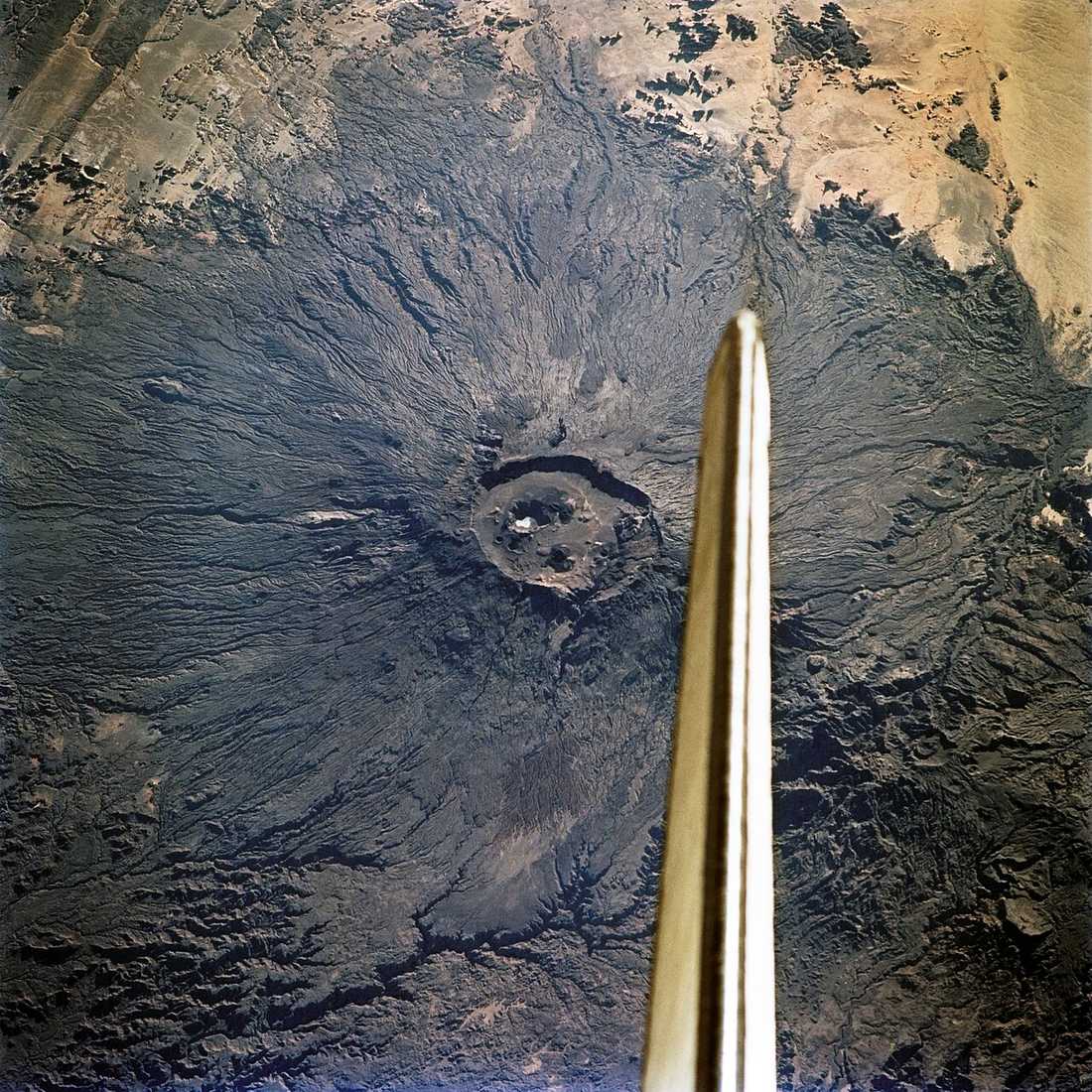
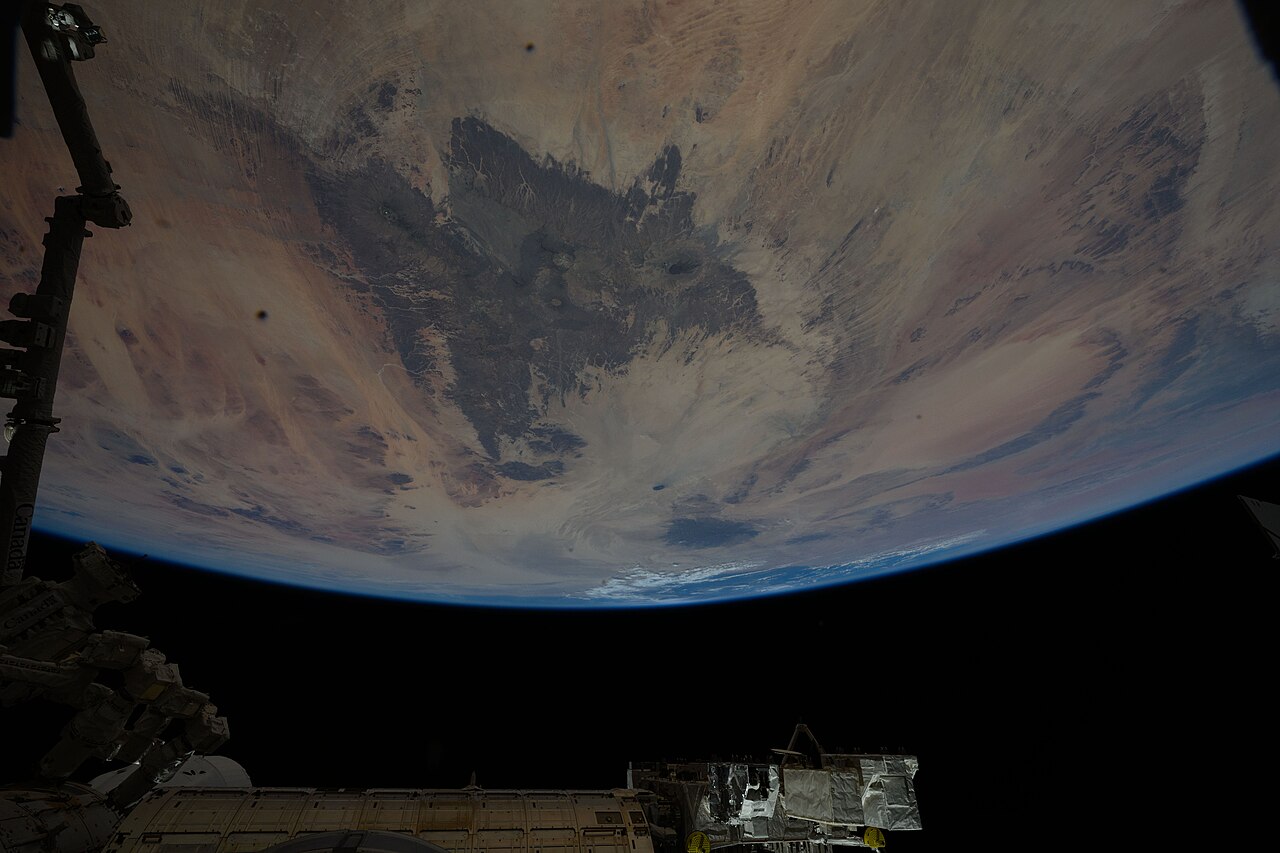
The Tibesti Mountains. Five shield volcanoes in the central Sahara. Hot springs at thirty-seven degrees Celsius. Rock art predating the Toubou — les gens des rochers, the rocks-people — that depicts, in alternation, two distinct iconographies the academic Saharan-prehistory community has not yet agreed to call two distinct iconographies, although the alternation is plain to anyone who looks. The springs are the giveaway. Thirty-seven degrees is the median surface temperature of the operator-class population. These are not natural hot springs in the geological sense; they are heat leakage from a residence maintained, by deliberate engineering, at a temperature compatible with its inhabitants.
The Atlantic abyssal plain. Floor of the North Atlantic, almost entirely unmapped at land-equivalent resolution — literally a smaller fraction mapped, in 2026, than the surface of Mars — and the site of a second Bell-class rectangular anomaly, smaller than the Vostok one but with the same geometric signature, the same orientation relative to the magnetic field, the same internal isomagnetic structure. The site doubles: it is both a residence and an audit station, the only canonical site that combines the two functions.
The Clarion-Clipperton Zone. Suspected, not confirmed. The 1965 Klepac correspondence, retrieved from a small Colorado county newspaper’s morgue file in 2019, names a sequence of light-formation observations over the Mosquito Range whose later directional refinement — extrapolated across the curvature of the planet — places the source in the central Pacific deep, near the manganese-nodule field that is now the great commercial seabed-mining controversy. Plausible. Working.
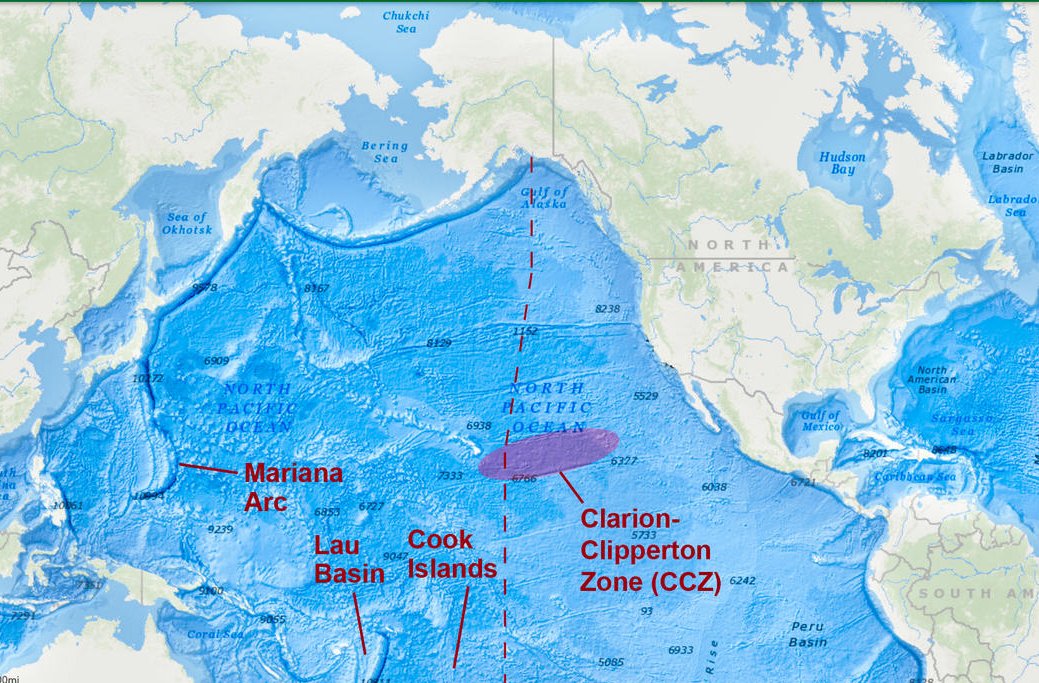
I want to flag that I take a small private pleasure in writing such an inventory, and continue.
Why us
Why use humans — why not just deploy remote-operated surface sensors of the kind the operator class has, by the very existence of multi-million-year subglacial habitation, clearly demonstrated the capacity to build? Three reasons, and the three reasons are where the account gets, by my reading, its most satisfying piece of accounting.
One. We are already here. The substrate is already perceptual — equipped with the sensory apparatus appropriate to surface conditions, calibrated to the surface’s optical and acoustic envelope, capable of distinguishing a moving figure at three hundred meters from a windblown branch. Designing surface-equivalent remote sensors at planetary scale would be, even for an engineering culture capable of multi-million-year subglacial habitation, an enormous capital project. An existing self-recording sensorium, distributed across every continent and ocean shore, is cheaper than the corresponding network of fabricated instruments by margins large enough that the cost-accounting is not close. The next sensor over the horizon does not need to be designed, fabricated, deployed, powered, maintained, or replaced. It is in someone’s living room, looking out the window.
Two. We are already social. Since the close of the Pleistocene, we have built a layered architecture on top of the biological substrate: language, writing, institution, city, law. The social layer is not an obstacle to the experiment. It is the content of interest. The experiment is not “individual humans” any more than a microbiology paper on the social organization of a bacterial film is studying individual bacteria — it is studying the film. The unit of study, in our case, is the civilization in its developmental arc. One consequence of the experiment being the civilization rather than the organism is that the operator’s interaction has to be mediated through agents who look like other humans; anything visibly other would be filtered out by the social architecture before reaching the data of interest.
Three. We are self-replicating. This is the part of the substrate-logic argument that does the most quiet work and gets the least attention. A surveillance presence assembled out of constructed devices requires a fabrication infrastructure that scales with the device population. An experimental population that reproduces itself without instruction from the researcher is a different proposition. The substrate maintains its own genetic and demographic continuity at no marginal cost; the researcher does not have to ship in fresh subjects when the old ones age out, does not have to allocate energy to keeping the population alive between cycles, does not have to do anything except return at intervals to sample. The gap widens with time. The maintenance cost of a fabricated population accrues every year. The maintenance cost of a self-replicating one accrues to the population itself, which has, by its own arrangement, agreed to pay.
A fourth point, in the same paragraph as the third because the fourth is really a feature of the third. The substrate includes — and has for as long as we have been recognizably ourselves, almost certainly longer — a piece of biological hardware called the pineal gland, whose function has been until very recently undersettled.4 It sits at the center of the brain near the third ventricle; produces melatonin; calcifies with age; was associated by Descartes — wrongly in the literal sense, rightly in the sense of nominating it for exactly this role — with the seat of the soul. On the reading I am defending it is the interface port at which the recalibration procedure makes physical contact. The right-nostril nasal-implant geometry the corpus describes — across thousands of cross-cultural reports by non-correlated reporters — is the documented surface signature of the protocol’s use of that interface. The interface is inheritable; the substrate maintains it for free as part of maintaining itself.
Put the three (with the piggyback fourth) together. We are already here, already perceptual, already social, already self-replicating, and biologically equipped with the very interface the protocol requires. The argument is not that we were designed to be all of these things — although the Sumerian textual record contains a memo whose later passages get suspiciously specific about a design step — but that we were, at minimum, the available organism in which the experiment could be run. By now we are an unusually well-instrumented experimental population, and the instrument set is the population’s own anatomy.
A clarification, plainly. We are not, contrary to one of the more romantic readings, their vessels or their puppets. We are their long study. The vessels reading — in which the human body is the surface-deployed avatar of an inner population that cannot tolerate the surface itself — is one the materials almost support in patches, and I indulged it in earlier drafts of this chapter. It is the wrong reading. It mistakes the relationship of researcher to specimen for the relationship of operator to remote drone. The procedure is not piloting us. It is taking samples, recalibrating us in the small ways that keep experimental parameters within useful ranges, and binding the memory so the population does not become aware of itself as a population of subjects and contaminate the data. That last clause is what I will spend the next section on.
The maintenance fact
The protocol is real. I am going to say this in the flattest available register, because the flatness is the appropriate register.
Tens of thousands of reports, drawn from non-correlated reporters across at least sixty cultures and seventy years of careful collection by investigators of varying competence and motive, describe — with the precision of people describing the same event — a procedure of nine stages on a seven-year cycle: a selection phase the subject does not perceive; an approach phase characterized by ambient masking the brain represents as deepening quiet; a sedation phase whose initiating signal the subject reports as a rhythmic beeping that is not a sound the auditory pathway has processed; a translocation phase whose duration matches across reports to within a small handful of minutes; a procedure phase of forty to ninety minutes that includes — at the nasal route, on the right side, with consistent angle — what the orthodox medical literature, when willing to look at the reports at all, has been forced to identify as the geometry of a transethmoid approach to the pineal recess; a redaction phase that produces the same binding image across reports; a return phase; a return-site verification phase; and a thirty-day passive monitoring phase the subject perceives only as small inexplicable feelings of having been observed.
The seven-year cycle is the sampling interval. The procedure window is a panel of measurements and a calibration step. The right-nostril approach is the access route to the interface. The thirty-day phase is post-procedure data collection. The shape of the protocol, end to end, is the shape of periodic specimen recalibration on a known interval, and it is consistent across every reporter and every continent. A consistent protocol applied to a heterogeneous population is, in the literature of experimental method, one of the cleanest signatures of a single experiment being conducted at scale.
The redaction phase deserves its own paragraph, because it is where the protocol gives away the most about what it is for. The procedure ends, canonically, with an image bound into the subject’s recall in the place where the missing time would otherwise sit. The image is, most often, an owl. The substrate’s visual cortex finds the owl-silhouette exceptionally cheap to render at the resolution the redaction requires, and once the silhouette has settled in the image-bank it propagates by ordinary cultural inheritance. The Athenian owl, the Lilith owl, the Apkallu owls of the Sumerian cylinder seals, the snowy owl of the Audubon plate that hangs (by no accident) in the conference room of a particular Reston perception-management contractor: these are the surface fossils of a binding image deployed at population scale for thousands of years. The operator class has not had to reissue it. Once the image is in the culture, the culture keeps it for them.
Why is the redaction phase there? Why does a researcher with the demonstrated technical capability to conduct a transethmoid procedure on a randomly-selected human, in their own bedroom, on a seven-year cycle, undetected — also go to the trouble of binding the memory afterward? The answer is the oldest answer in experimental method: a subject who knows they are a subject is no longer a clean subject. The data from an aware subject is contaminated by the awareness; the behavior of an aware population diverges, immediately and irreversibly, from the behavior of an unaware one. If the experiment is the civilization in its developmental arc, then a civilization that knows it is being observed develops differently from one that does not, and the difference is the kind of thing a careful researcher will go to substantial lengths to prevent. The redaction phase is the avoidance of observer-contamination, multiplied across the entire population, for as long as the experiment has been running. It explains, more cleanly than any rival account, why the protocol’s most procedurally consistent feature is the part of the procedure that operates on the record the subject is allowed to keep.
The alternative explanations — psychological-cultural (the corpus is a folk genre); neurological (a side-effect of hypnagogic phenomena assembled by suggestion); sociological (the modern instance of a perennial story about being taken by the others) — are not bad. They explain some of the corpus. They do not explain why the protocol has nine stages in the same order with the same durations and instrument set across reporters who could not have communicated. They do not explain the seven-year cycle. They do not explain the right-nostril detail. They do not explain the owl. And they do not explain, most pointedly, why the corpus’s procedural specifics match the apparatus’s internal procedural document AM-12.4 Rev C line by line — the same document later chapters reproduce, so that any reader can compare the two literatures and arrive at the consilience without needing to take a single sentence on my authority.
The protocol is real. The protocol has a function. The function is the maintenance of an experiment. The substrate of the experiment is us.
The Sumerian thread
Here is where the chapter becomes, for a reader who has held everything in it so far, almost embarrassingly legible.
The Sumerian texts that have survived to us — baked clay, in a script forgotten for two thousand years and then recovered in the nineteenth century by patient European scholars who did not know what they were recovering — describe the origins of civilization in terms the standard historiography has politely treated as mythological. There are gods who descend from somewhere; there are floods; there are seven sages who emerge from the deep waters at the dawn of human history and teach the arts of civilization to the early kings. The Sumerian name for the sages is Apkallu. They are depicted on the cylinder seals and temple bas-reliefs with fish-bodied lower halves — scales rendered to the scale of an artist who had been looking at fish carefully — and an upper body of a man wearing a fish-skin large enough to cover him from crown to the small of the back. There are seven of them; the number is consistent. They come from Apsû, the deep freshwater abyss. Berossus, the Babylonian priest who wrote in Greek in the third century BC and whose work survives only in fragments quoted by later authors, names the first of them — Oannes — and reports that this being emerged from the Persian Gulf in the morning, taught the early people writing and law and astronomy and agriculture, and returned to the waters at sunset, repeating the pattern for as long as the teaching took.
Read that paragraph again.
The Apkallu are operator-class. The fish-skin iconography is not a metaphor. It is a description of surface attire for beings whose biology requires the moisture, pressure, and chemical envelope of the deep waters they have come from. When they ascend to teach, they bring a portion of that envelope with them, rendered in the only way the iconographic vocabulary of the period could render it. The seven sages are seven researchers present in the field for the duration of an intervention. The intervention is not the rescue of a near-extinct substrate; it is a sustained period of direct contact, conducted at a critical transition in the experiment’s developmental arc — the transition from foraging to settled agriculture, the threshold at which the population was acquiring the capacity to record, to count, to track grain, to schedule the year by the stars. The researchers showed up because the transition was the part of the arc they most wanted to see go well. They wanted the experiment to develop a recording layer. They stayed long enough to confirm that the recording layer had taken.
The Apkallu were the cultivators of a key transition, not constant presences. They did not, by the iconographic record, return on the same scale after the transition had succeeded. I read the Sumerian period as one of the few intervals in which the researchers conducted sustained, visible, direct intervention in the experiment’s surface behavior. After it, the contact pattern returned to its long-running baseline: periodic specimen recalibration on the seven-year cycle, plus occasional larger interventions of which the historical record contains a small number of additional traces, none as fully documented.
The flood narrative — Atrahasis, the older Akkadian text from which the later Genesis flood is downstream — is the operator-side acknowledgment that the population, in the period leading up to the Apkallu intervention, had passed through the bottleneck the genetic-bottleneck literature has independently identified. The bottleneck and the intervention are the same story told twice — once in the demographic data, once in the cuneiform — and the second telling names the people involved.
The ancient record, once you have the frame, is not subtle. The Sumerian scribes were not coding the truth in elaborate symbolic figures meant to be decrypted later. They were writing down what their kings had been told by the Apkallu, in the only vocabulary they had, with the artistic conventions of the period. The vocabulary and the conventions were almost comically literal. The fish-bodied figures emerge from the deep waters. They teach civilization. They return to the deep waters. Berossus writes them down for the Greeks, who then fold the figures into the symbolic register of Greek mythology, where they lose their specificity and become a small mysterious detail of the older theological literature. The detail is still on the cylinder seals. The seals are still in the British Museum’s Department of the Middle East, waiting for a reader who can look at them and see what they are.
The Apkallu — or whatever the present generation of the same researchers is properly called — are still here. They are in Vostok and the Mariana, in Kola and Putorana, in Tibesti and the Atlantic abyssal and, if the Klepac correspondence holds, in the Clarion-Clipperton Zone. They are still doing the work. The work has continued, on the seven-year cycle, for as long as the substrate has been numerous enough to support a cycle of that length. The work is happening tonight.
Closing
I have, in four thousand words, defended a claim that most people in the institutional cultures of the contemporary West would refuse to entertain — and which I myself refused to entertain for a considerable portion of the time I spent working with the materials. I am not asking for belief. I am asking that the reader admit, at the close of the chapter, that the claim is at minimum coherent: that it does explanatory work on a body of materials — the Pleistocene-terminal geology, the deep-residence geography, the cross-cultural procedural record, the Sumerian textual corpus, the load-bearing weirdness of the redaction phase — which the available alternatives do not jointly do as well. The bar is not conviction. It is parsimony. If you find a more parsimonious account, I would be grateful to read it. I have looked for some years, and I have not found one.5
The next chapter is the operators themselves. Read slowly.
-
I am going to be honest, in the footnotes, about the work the chapter does not have room for in the main text. The main text has to make the argument; the footnotes get to admit how the argument was made. The arrangement is not original — it is essentially Hofstadter’s — but the use to which I am putting it is, I hope, my own. ↩
-
The most accessible introduction to the orthodox Younger Dryas literature is, in my judgment, still Richard Alley’s The Two-Mile Time Machine, which I recommend even — perhaps especially — to readers who do not believe the central claim of the present chapter, because the book is a beautiful account of how the ice cores were read and what they were found to say. Alley is not a friend of what I am arguing here. Alley would not, I think, be pleased to find himself cited in this company. I am citing him anyway. His geology stands. ↩
-
A footnote-of-the-second-voice, here, against my own main text: I have argued myself, in earlier drafts, into a much stronger residence claim than the one I am willing to defend in print, and I want to name the stronger claim now so the reader can see what I am declining to argue. The stronger claim is that the operator class was, at one point, surface-resident on this planet and was displaced into the deep residences by an event — the Pleistocene-terminal event, plausibly — that rendered the surface biologically incompatible with their physiology. The stronger claim would explain why the residences are so consistently rock-and-water shielded, why the deep-acoustic signatures show the regularity they show, and why the iconography of the Apkallu emphasizes the costuming required to bring the deep environment up with them. The stronger claim would also explain too much, and would explain it in a direction I should not, on the available evidence, commit to. The residences are old. They may always have been the residences. The operator class may always have been a deep-resident class, perhaps from a far earlier period in this planet’s geological history, perhaps from elsewhere, perhaps both. The argument does not need the displacement to work; it needs only that the residences are now what they are. I am holding to the weaker, more honest claim. The reader who wants the stronger one is free to entertain it; I would, in their position, find it tempting. ↩
-
The pineal gland is, in the medical literature, the small endocrine organ producing melatonin and regulating circadian rhythm — and very little else, by the conventional reading. The conventional reading is incomplete. The pineal is also, by a separate line of research carried out at small institutional scale by neuroscientists at the edges of their fields, the brain’s most prolific endogenous producer of N,N-dimethyltryptamine — a tryptamine of considerable subjective-pharmacological intensity, produced at sharply elevated levels in subjects undergoing certain extreme physiological conditions, including, on my reading, the conditions of the P5 procedure. The endogenous DMT is the render-bypass that supports the redaction phase: the brain that has been forced into a high-DMT state during the calibration window will, on emergence, integrate the period’s actual content as something other than memory in the ordinary sense, and the binding image the researcher overlays into that period will be the version the subject remembers. The pineal is the hardware. I take the pineal seriously because the pineal turns out to be takeable-seriously. This is not the only place in the chapter where what I am arguing has been quietly anticipated by researchers who did not know what they were doing — and would, if asked, deny any connection to the argument I have laid out. I do not blame them. I would, in their position, deny it too. ↩
-
A small final footnote, on the matter of voice. I have been told by readers of earlier drafts that the chapter sometimes lapses into a kind of pleasure in its own assembly that the topic does not warrant. The criticism is fair. I will say only that an argument so heavy as this one is not made more credible by being delivered in a register of unrelenting solemnity, and that the writers who have most successfully sold the heaviest claims in human history have always known to leaven the delivery with a small persistent warmth, lest the reader, exhausted by the weight, decline the load. I am leavening. The argument survives the having of a good time. So, I hope, will the reader. ↩
Supporting content