Clarion-Clipperton Zone
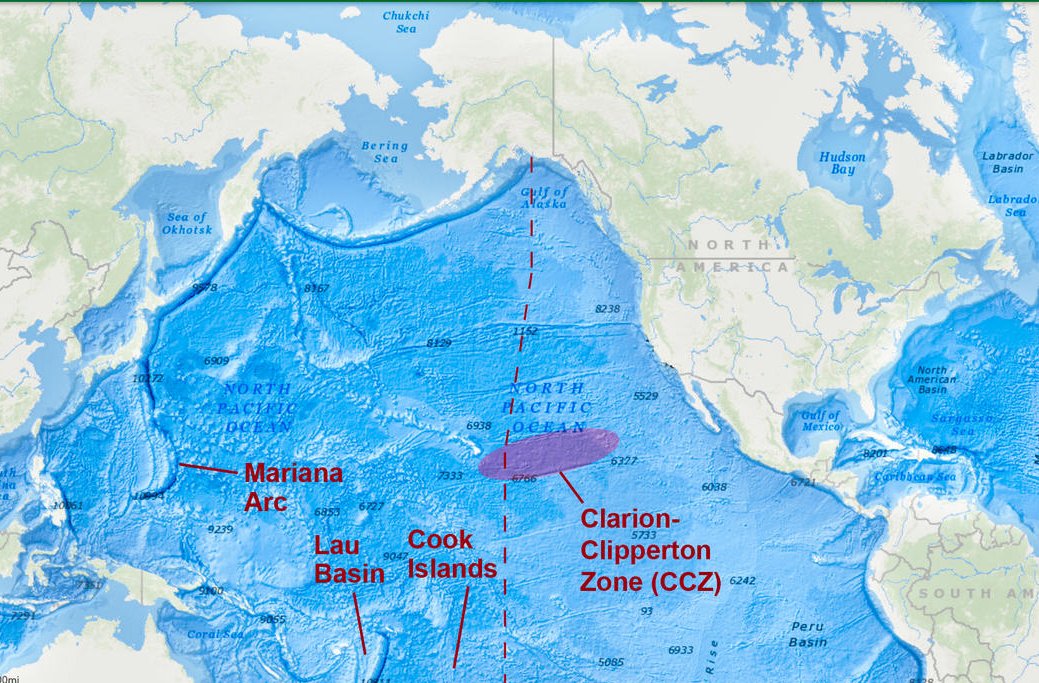
0°–20°N, 110°–160°W
Central Pacific — abyssal seabed-mining region between Hawaiʻi and Mexico
[from the public record]
20.0000, -160.0000 · view on OpenStreetMap →
What's documented
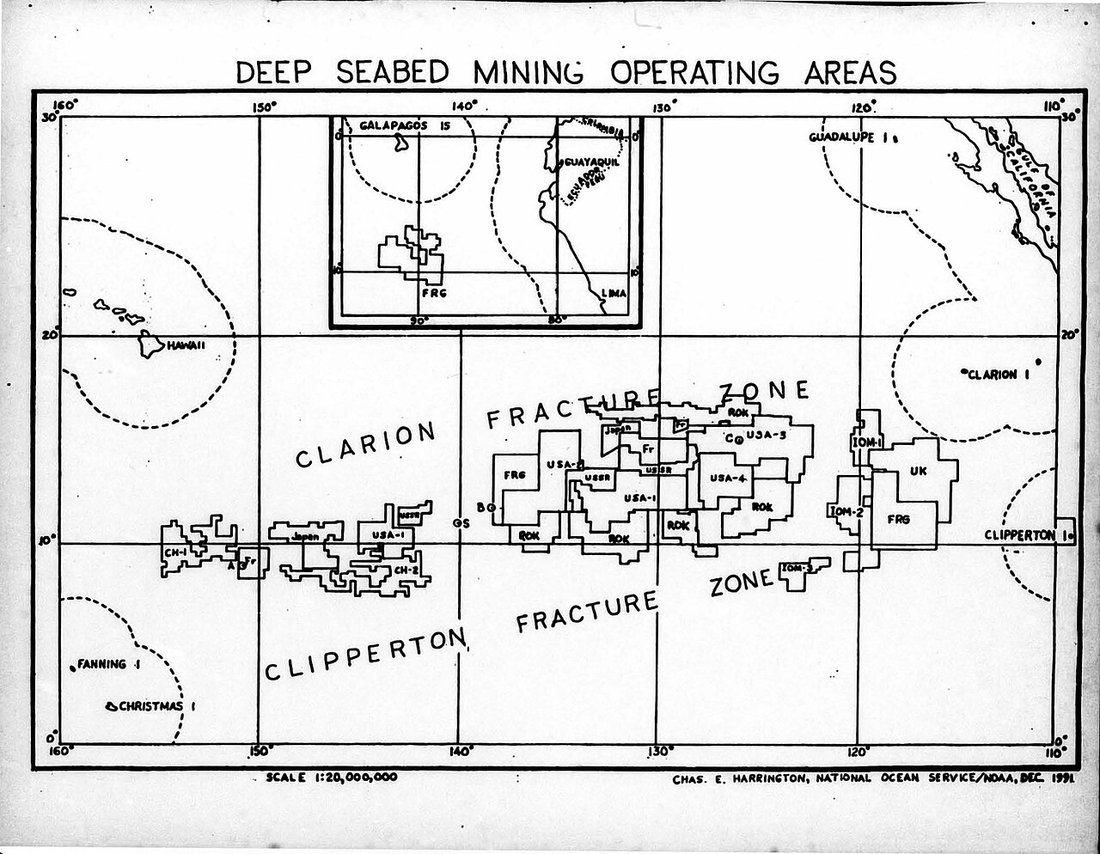
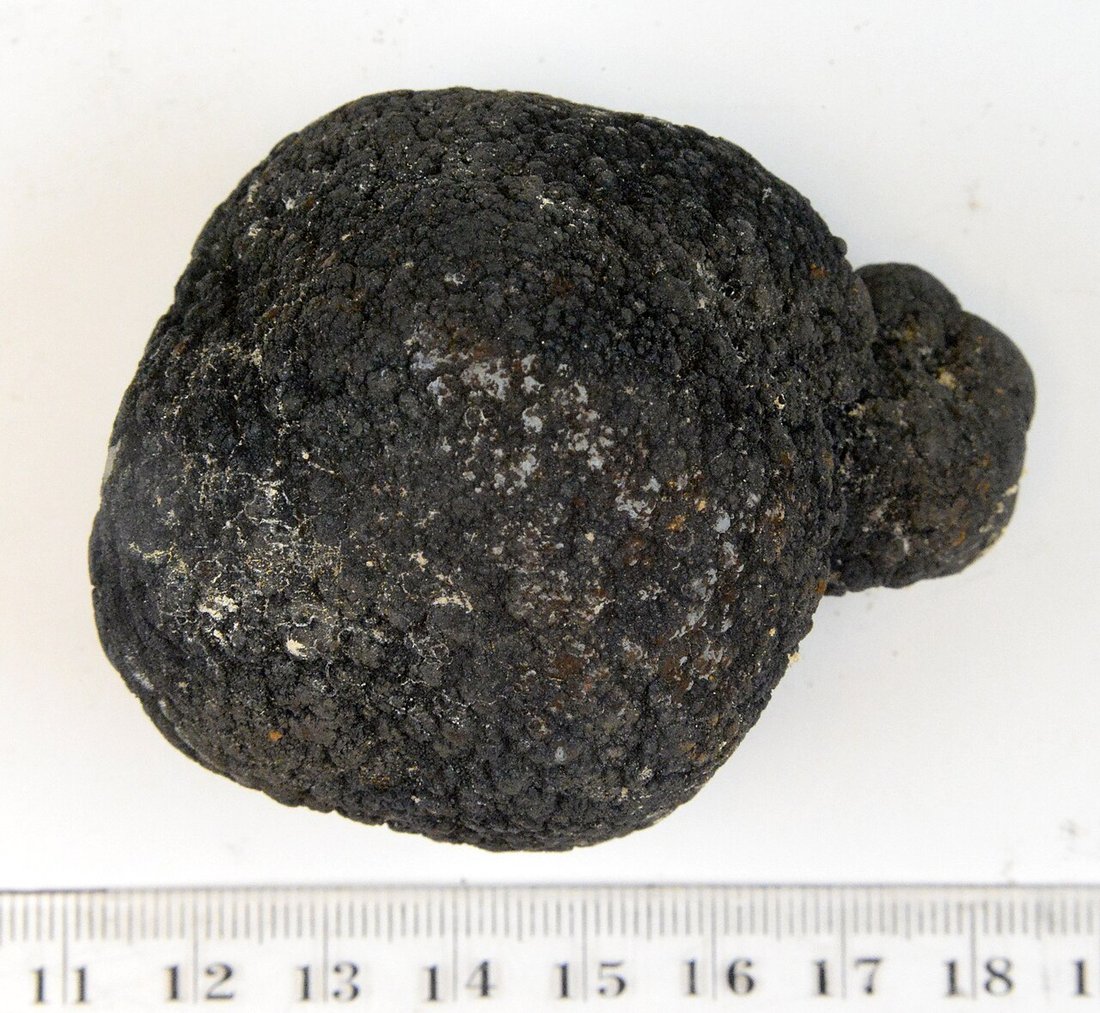
The Clarion-Clipperton Zone is a vast abyssal plain in the central Pacific, between the Clarion and Clipperton fracture zones. It is 4,000 to 6,000 meters deep and covers roughly 4.5 million km². The seafloor is carpeted with polymetallic nodules containing manganese, nickel, copper, and cobalt; the CCZ is the center of the contemporary international seabed-mining controversy. ISA (International Seabed Authority) regulates exploration and (now) exploitation contracts here.
Notable & intriguing
-
The CCZ floor is carpeted with polymetallic nodules — fist-sized concretions of manganese, nickel, copper, and cobalt that grow at ~1 cm per million years and represent one of the largest known terrestrial concentrations of strategic metals.
ISA Technical Study 2, 2010.
-
Recent eDNA and seafloor-camera surveys have catalogued thousands of likely undescribed species in the zone — a Natural History Museum London paper in 2023 identified 5,578 morphotypes, of which 88–92% were new to science.
Rabone et al., Current Biology, May 2023.
-
In 2024 a Nature Geoscience paper reported evidence of “dark oxygen” produced electrolytically on the seafloor by the nodules themselves — abiotic oxygen generation at depths previously assumed anoxic. The finding is contested and remains under active replication study.
Sweetman et al., Nature Geoscience, July 2024.
Public-record items already documented about this subject. Folklore is labelled. Sources cited where the specificity warrants it.
Public-record imagery
Referenced in the codex
- 1. We Are the Substrate The claim, the substrate-logic argument in three points, the Apkallu emerging from the deep waters to teach civilization. The long study, said plainly.
- 3. The Observers Above The third layer. The rectangle under the Vostok ice. The same rectangle in two other oceans. The man at Starbucks's "nearby galaxies" claim, taken seriously without being believed.