Mariana Trench & Challenger Deep
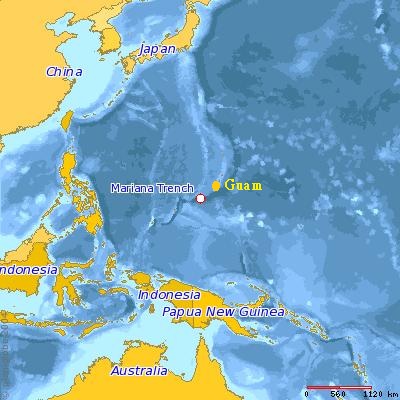
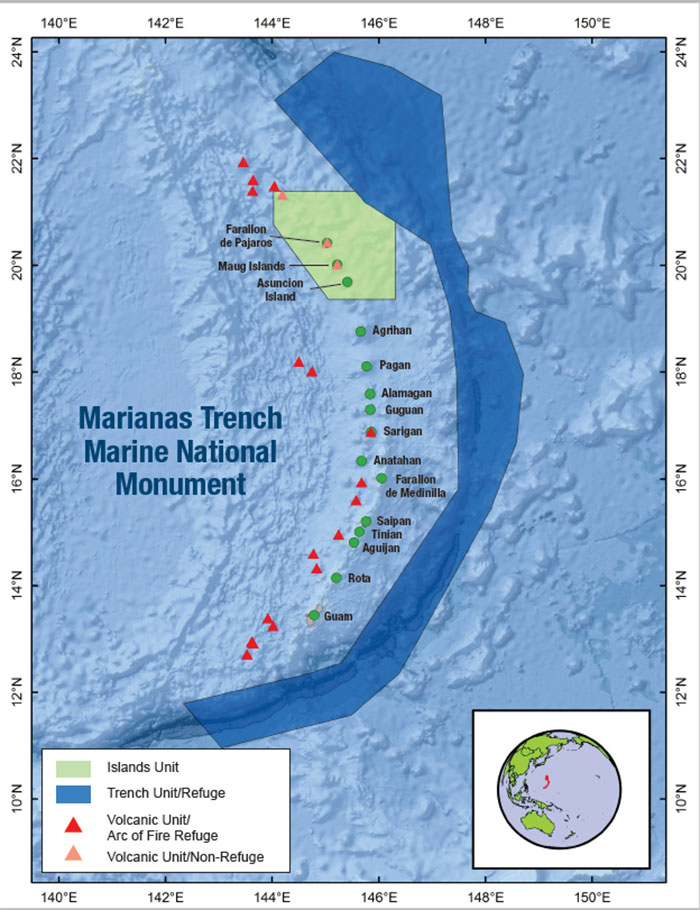
11°22′N, 142°35′E
Western Pacific — deepest known oceanic trench; Challenger Deep at ~10,935 m
[from the public record]
11.3667, 142.5833 · view on OpenStreetMap →
What's documented
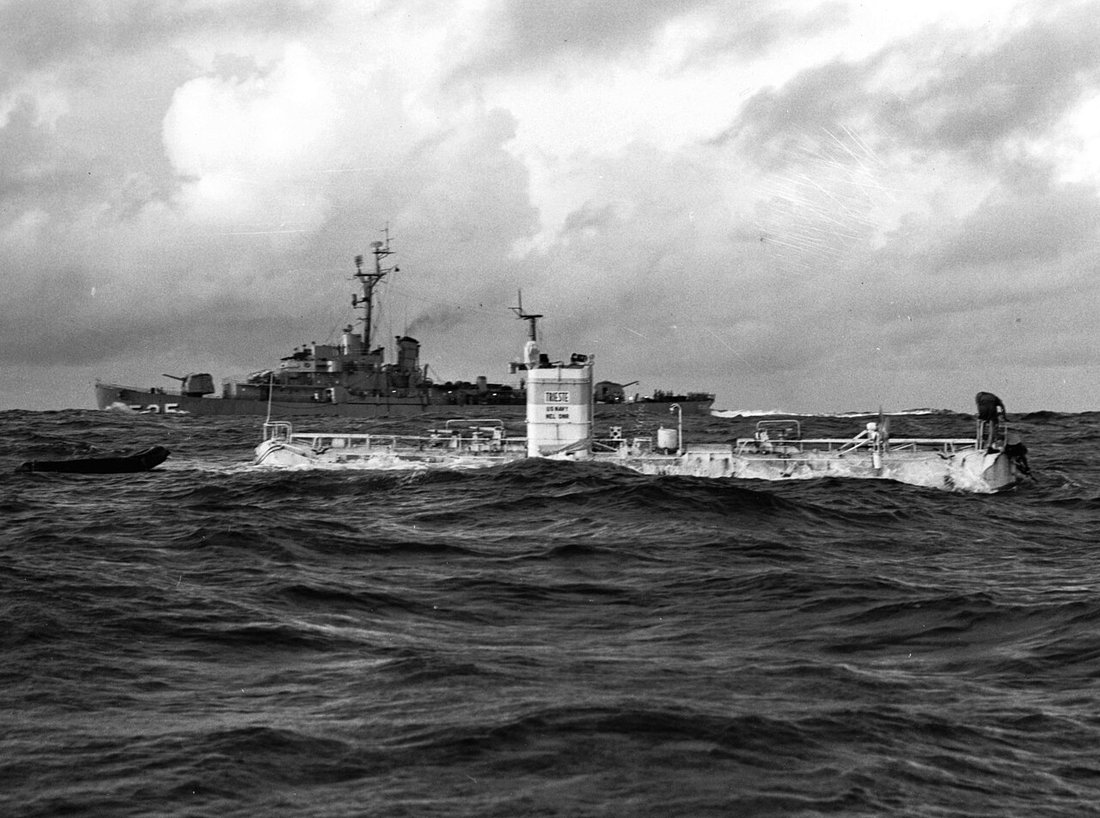
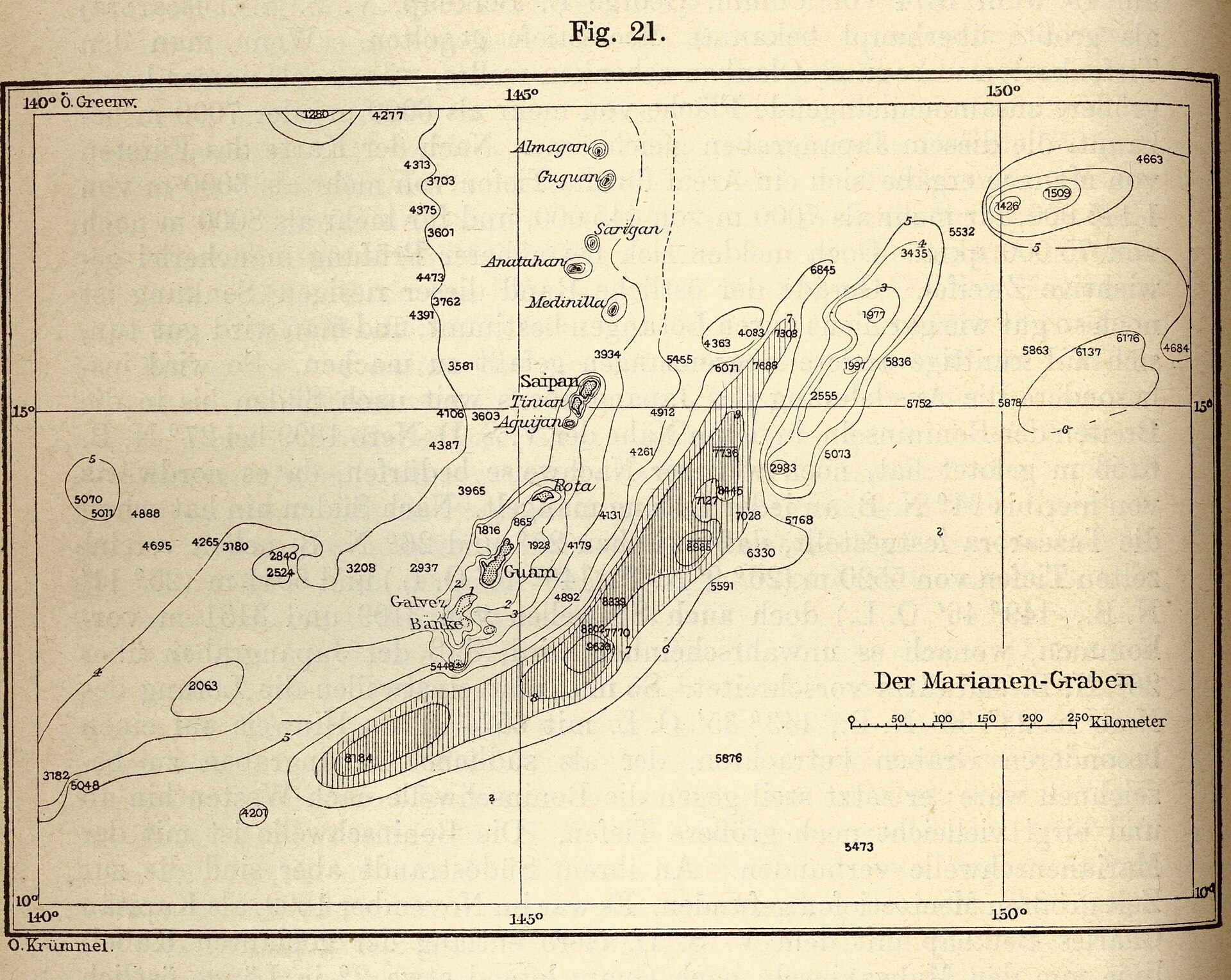
The Mariana Trench is the deepest oceanic trench on Earth: Challenger Deep, at approximately 10,935 meters, lies at its southern end. Pressure at the floor is roughly 1,100 atmospheres. The trench was first sounded by HMS *Challenger* in 1875; first visited by the bathyscaphe *Trieste* in 1960; revisited by the *Deepsea Challenger* in 2012 and by a Triton-class submersible repeatedly since 2019. NOAA hydrophone networks log persistent low-frequency acoustic signatures from across the trench's volume, most of which is unmapped at land-equivalent resolution.
Notable & intriguing
-
Challenger Deep is 10,935 m below sea level — deeper than Mt. Everest is tall (8,849 m). Pressure at the floor is ~1,086 atmospheres, more than a thousand times sea-level pressure.
NOAA Ocean Exploration; Stewart & Jamieson 2019.
-
Filmmaker James Cameron made a solo dive to the Challenger Deep on 26 March 2012 in the Deepsea Challenger, the first solo descent and only the second crewed visit since the Trieste in 1960.
National Geographic Society, March 2012.
-
In 2019 a NOAA expedition led by Victor Vescovo recovered a plastic bag and candy wrappers from the floor of the Challenger Deep.
BBC News, 13 May 2019.
-
NOAA’s hydrophone networks have logged a repeating low-frequency narrowband acoustic signature in the Mariana region — the “Western Pacific Biotwang,” recorded 2014–2016 by autonomous Wave Gliders, attributed to a baleen whale of undetermined species.
Nieukirk et al., JASA Express Letters, 2016.
Public-record items already documented about this subject. Folklore is labelled. Sources cited where the specificity warrants it.
Public-record imagery
Referenced in the codex
- 1. We Are the Substrate The claim, the substrate-logic argument in three points, the Apkallu emerging from the deep waters to teach civilization. The long study, said plainly.
- 2. The Operators, Several Kinds A field guide to the menagerie. Stewards, Technicians, Watchers, and the question of the Apkallu. With an argument that the operator-side has been a coalition, not a monolith, the whole time.