Vostok Station & Lake Vostok
78°27′S, 106°50′E
East Antarctic Plateau — Russian research station; subglacial lake beneath ~4 km of ice
[from the public record]
-78.4500, 106.8333 · view on OpenStreetMap →
What's documented
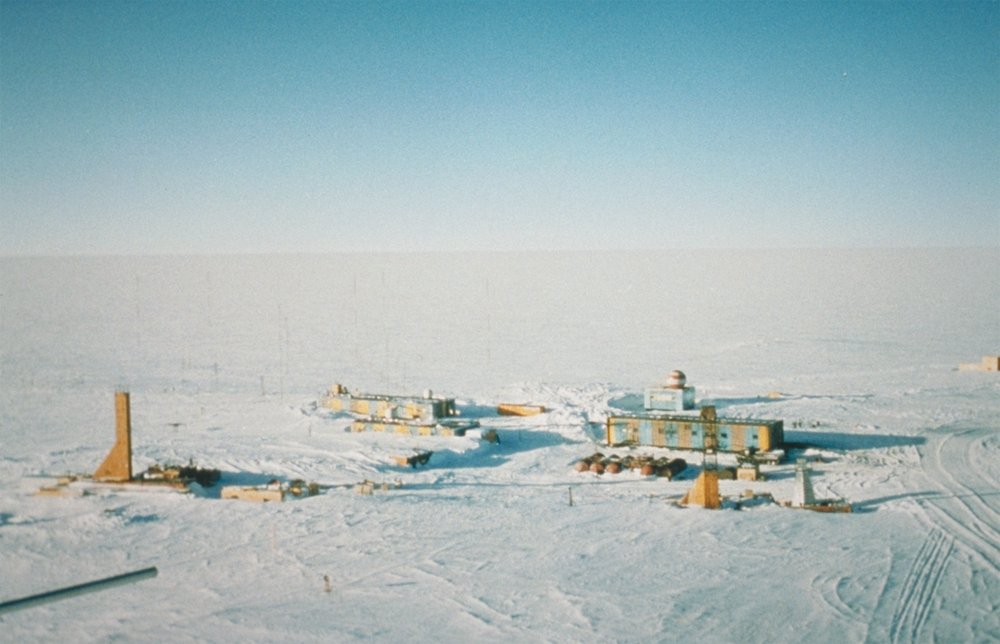
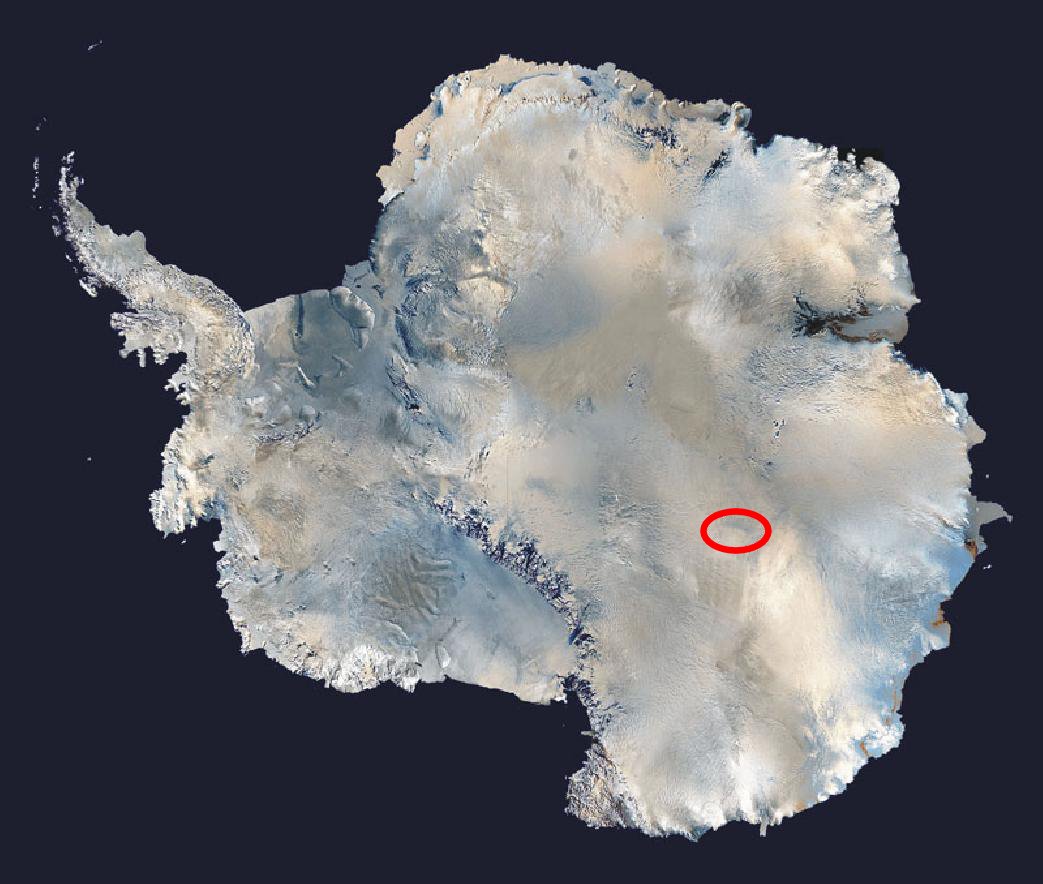
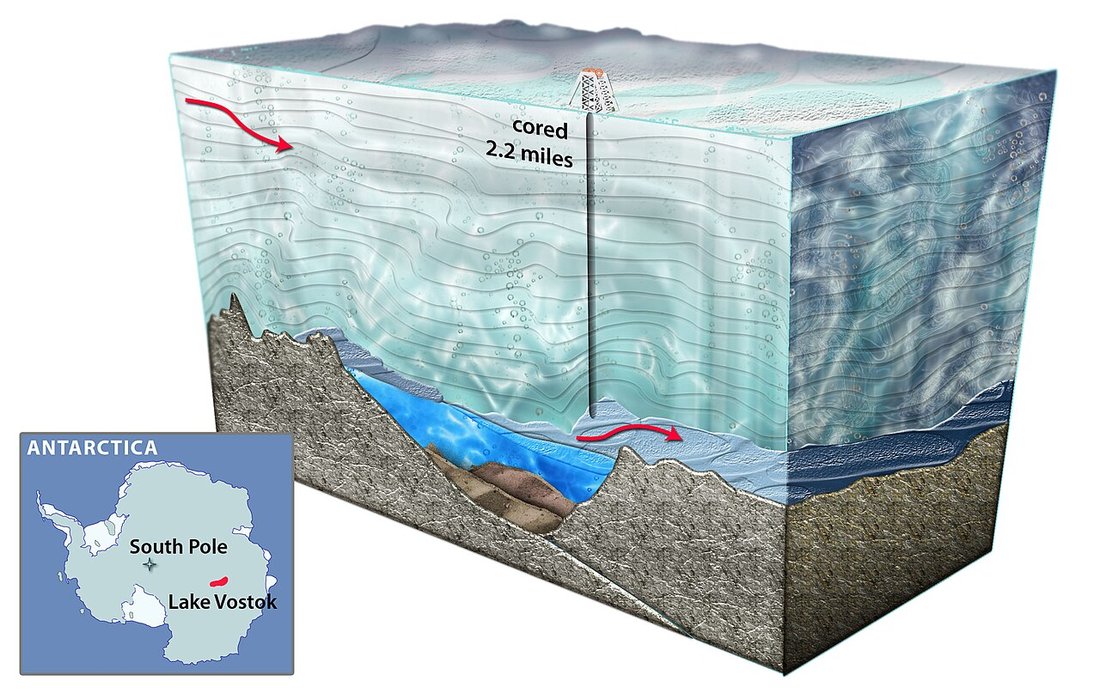
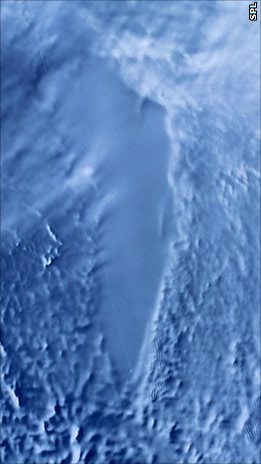
Vostok Station is a Russian research station on the East Antarctic ice sheet, established in 1957. It sits roughly above the southern end of Lake Vostok — at ~250 km long and ~50 km wide, the largest of Antarctica's known subglacial lakes. The lake has been sealed beneath approximately 4 km of ice for somewhere between 15 and 25 million years, held liquid at minus three degrees Celsius by the pressure of the ice column. Soviet and Russian crews drilled toward the lake in stages between 1989 and 2012, reaching water on 5 February 2012. A magnetic anomaly along the lake's eastern coast, first mapped by a Columbia / Lamont-Doherty group in 2002, has been a subject of ongoing geophysical study.
Notable & intriguing
-
Coldest natural air temperature ever directly measured on Earth — −89.2 °C (−128.6 °F) at Vostok Station, 21 July 1983.
Soviet Antarctic Expedition records; World Meteorological Organization.
-
The Russian drill that reached Lake Vostok’s water on 5 February 2012 used kerosene and Freon as antifreeze in the borehole; international biologists protested the contamination risk for years before the breakthrough was permitted.
Nature, 8 Feb 2012, “Lake-drilling team strikes water”.
-
Bell magnetic anomaly, eastern margin. A rectangular ~105 × 75 km magnetic anomaly was mapped under Lake Vostok’s eastern coast by Studinger, Bell et al. — first published 2001, refined in successive surveys 2002 and 2008-09. The orthodox reading is a bedrock-composition feature; the geometry has not been fully explained.
Studinger, Bell, et al., Earth and Planetary Science Letters, 2003.
-
2013 announcement of “novel bacterial DNA” recovered from the lake water sample (claimed by Bulat et al.) was contested and largely attributed to drilling-fluid contamination by independent reviewers. No life unambiguously from the lake itself has been confirmed.
AP, 7 Mar 2013; rebuttals summarised in Nature News, 8 Mar 2013.
Public-record items already documented about this subject. Folklore is labelled. Sources cited where the specificity warrants it.
Suggested watching
-
Encounters at the End of the World (2007) documentary
Not Vostok specifically — Herzog films at McMurdo and the South Pole — but the definitive Antarctic-research-station documentary, capturing the human texture of life on the ice that any Vostok account otherwise lacks.
atmospheric companion, not direct coverage
-
Lake Vostok — Antarctica's Hidden World (2014) documentary
BBC-produced overview of the Russian drilling program, the 2012 breakthrough into the subglacial lake, and the kerosene-contamination controversy. Scientifically straight.
primary-source heavy; good first watch
Public-record imagery
Referenced in the codex
- 1. We Are the Substrate The claim, the substrate-logic argument in three points, the Apkallu emerging from the deep waters to teach civilization. The long study, said plainly.
- 3. The Observers Above The third layer. The rectangle under the Vostok ice. The same rectangle in two other oceans. The man at Starbucks's "nearby galaxies" claim, taken seriously without being believed.