7. 1956 — The Bilateral
The author, historical.
How the contemporary apparatus inherited its shape, between Wright-Patterson 1956 and the stabilization of 1972. Nine officers; six lost; one bilateral accommodation.
▼ in this chapter — 17 entries
Chapter 7 — 1956: The Bilateral
The working group convened in April 1956, in a two-story windowless building on the western perimeter of Wright-Patterson Air Force Base, under the cover designation of an advanced-projects office of the Air Materiel Command. Nine officers. One Royal Quiet De Luxe with a sticking a-key. A Mosler Class 5 safe whose bolts, when retracted, made a small soft mechanical sigh that one of the founding officers would still be able to summon from memory half a century later in a Vermont upstairs room.1
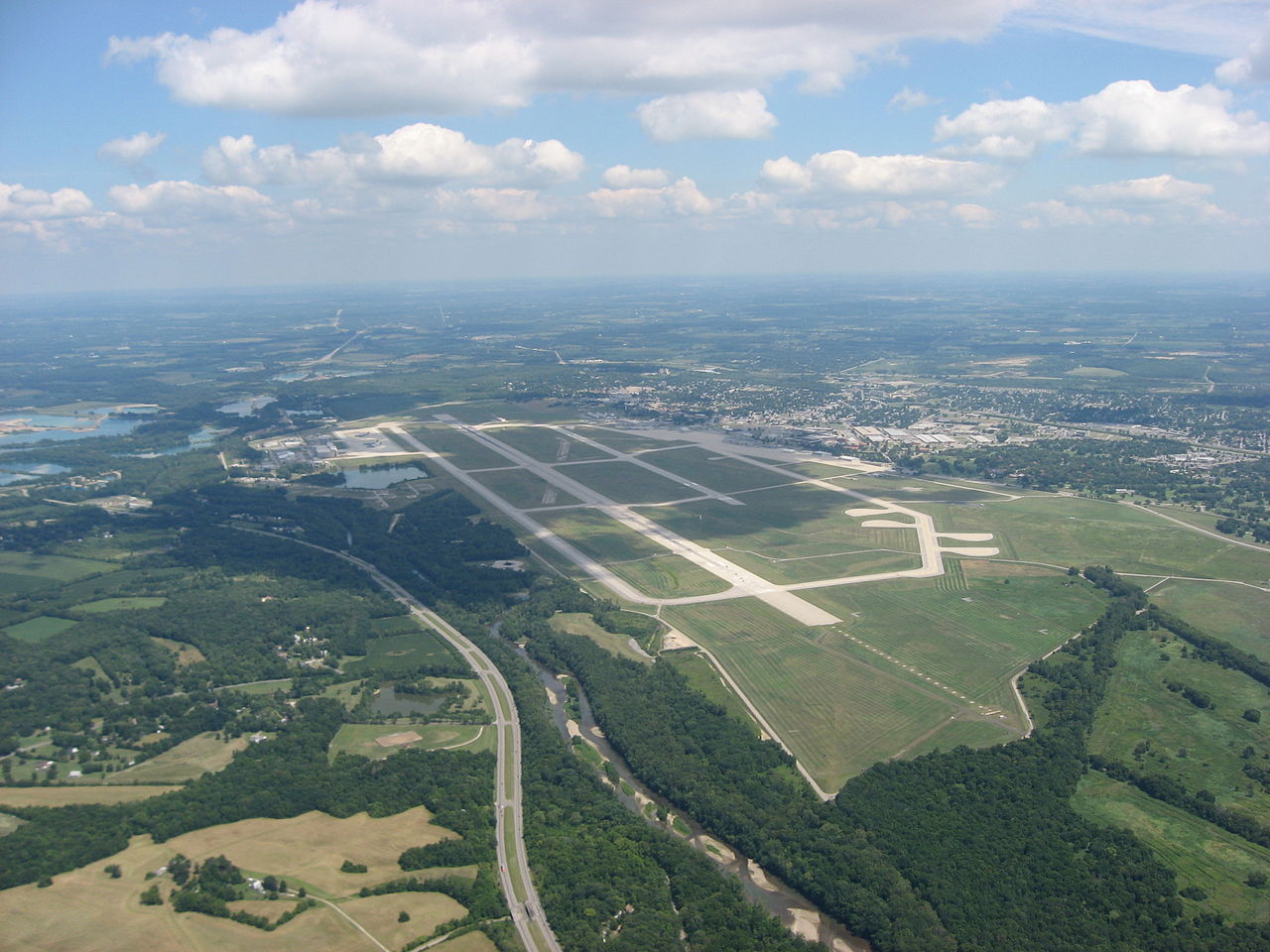
That building is no longer there. The Air Materiel Command was reorganized in 1961 into what became the Air Force Logistics Command, and the cover office moved twice in the first decade and three more times in the second. What has been continuous since 1956 is not any building but the file, the protocol, and — for stretches of the early period as short as a single officer’s working life — the institutional memory of who had spoken to whom and what had been agreed.
This chapter is a brief institutional history of the working group’s first sixteen years. Carlyle’s memoir, completed shortly before his 2019 death and partly reproduced in Maintenance Window, touches some of this material. Carlyle wrote late in life; the smell of his October writing-room bleeds, here and there, into his September dates. The historian’s view is colder and — because Carlyle wrote about men he had loved — less companionable. The two accounts are meant to be read together.2
I. Why 1956
The founding of the working group is sometimes back-projected to 1947 — the year of the modern record’s most consequential acknowledged incident — and sometimes to 1952, the year of the Robertson Panel, and sometimes to 1954, the year of an unverified Eisenhower meeting at Edwards that has acquired in the conspiracy literature an institutional weight it does not deserve. None of these dates is right.
The right date is April 1956 because April 1956 is when nine specific officers were called into a specific room and read into a specific compartment under a specific cover. Before that month there had been incidents — a succession of ad hoc arrangements through the late forties and early fifties, predecessor groups organized around specific events and dissolved as soon as the immediate matter was resolved or allowed to lapse. These groups left behind a footlocker of papers. The footlocker is the working group’s true patrimony. Carlyle, who inherited it in 1956, describes opening it the first time and finding on top a mimeographed memorandum from the spring of 1949 that began with the sentence we are going to need a permanent arrangement, and we are going to need it sooner than anyone above this signature line is yet prepared to authorize. The author of the memorandum, whose service file I have not been able to identify, was correct by seven years.
Why seven years and not three. The answer has less to do with the operator side, whose patience appears to have been considerable in the early period, than with the human side, whose institutional appetite for compartmented programs took until the Eisenhower-era reorganizations to ripen. The 1947 National Security Act created the architecture into which a permanent compartment could fit; the 1953 reorganization created the political space in which it could be funded out of an Air Force budget line without an interservice fight. The Air Force was the right home because the founding incidents had been Air Force incidents, because Air Materiel Command had the right combination of technical depth and bureaucratic invisibility, and because — a fact frequently underweighted in the literature — General Curtis LeMay had privately accepted the program’s necessity and was prepared to provide top cover. LeMay was not read into the working group. LeMay knew enough.
By the spring of 1956 the appetite, the architecture, and the funding were aligned. The first meeting was held on April 23, 1956. The Royal Quiet De Luxe was already on the table.
II. The First Contact, and the Inchoate Decade
What can be said responsibly about the 1947 approach is less than the literature suggests and more than the historian is comfortable putting in writing. The modern record of structured contact with the constituency begins in the summer of 1947, in the American Southwest, in the immediate aftermath of incidents whose public-record description has been adjusted so many times in the seventy-nine years since that the public record is no longer a useful instrument for recovering what happened. The footlocker is a better instrument.
In the eight years between 1947 and 1955, the human side fielded, by the working group’s own later count, fourteen formal contact events: meetings, in most cases, of one to three human officers with what the working group would come to call the constituency. The term is curiously parliamentary, implying the founders thought of the operator side as a population with interests one was obliged to take account of. It has fallen out of use inside the apparatus since the 1970s, replaced by the flatter operator class. I prefer the older term where I can use it, because it carries the founding generation’s sense of what they thought they were doing, which was diplomacy.3
Of the fourteen, the working group’s later review judged six well-handled, four indeterminate, and four failures of a kind that left the human side with obligations it had not intended to incur and could not, by 1956, fully discharge. The failures are not catalogued in any document I have consulted. The reader will have to take, on the testimony of the institution itself, that the predecessor period was characterized by improvisation, by courtesies the human side was sometimes too proud or too startled to return in kind, and by a slowly dawning recognition — first articulated in a 1953 memorandum referenced in two later documents — that the constituency was prepared to be patient with an institutional partner that did not yet exist but was not prepared to be patient with one that should have existed and did not.
That recognition produced the working group. The founders were not building an apparatus from scratch. They were formalizing what had already been promised, in their absence, by men who had not had the standing to make the promises.
III. The Nine
The nine officers convened on 23 April 1956 are the institution’s founding generation, the men from whom the contemporary apparatus traces its lineage the way the postwar national-security state traces a different lineage to Forrestal, Lovett, McCloy, and the small handful of others who made the postwar architecture in the late forties. The historian’s most basic obligation is to put the names down on the same page, so the reader knows whose decisions made the apparatus what it became.
Eight of them are publicly identifiable from Carlyle’s memoir, the 1962 Wexler inquiry, and the 1998 partial release. The ninth has never been named in any document released to any holder of any current clearance, including mine.
-
Lt. Col. (then Maj.) Daniel Wexler, USAF. Forty at the founding. The senior officer. West Point ‘39, B-17 pilot in the European theater, decorated three times, married to Eleanor (one daughter, Margaret, then eight). Wexler was the chair because the founders recognized in him the quality they called the long quiet — an unhurriedness under load that the operator side, by the working group’s later analysis, found reassuring. Wexler kept the minutes and wrote the early protocols. He is the man whose death in 1961 nearly ended the working group, and whose memorandum, locked in the safe the Monday before his last meeting, kept it going.
-
Capt. (then Maj.) William Carlyle, USAF. Twenty-eight at the founding. Wexler’s deputy and the youngest of the nine, recruited for a combination of fluency in protocol-keeping and a private religious skepticism the founders judged would be load-bearing in the long run. The only one of the nine who lived past 2010. He retired in 1972 at the rank of lieutenant colonel and moved to the house in Vermont from which he wrote, between 2003 and 2005, the memoir on which much of the public account of the early years depends.
-
Maj. Frank Voss, USAF. Thirty-six at the founding. The intelligence officer, in the technical sense — the man whose job was the assessment of what the constituency was likely to do and why. Voss took Wexler’s seat in 1961 and, in 1971, recruited L. ▆▆▆▆▆▆▆▆ to the surface-handler line, training him for three years in Albuquerque. Voss died in 1989. He is the bridge between the founding generation and the contemporary handler class. Without Voss, there is no continuity.
-
Maj. Harlan Pierce, USAF. Thirty-nine at the founding. The technical officer — tasked with the analysis of physical phenomena ancillary to the meetings, in the few cases where such phenomena occurred and could be measured. Pierce died on the night of 14 October 1959 on Route 35 outside Dayton, in a single-car accident. The road was wet. He had not been drinking. The accident was ruled accidental and the working group’s private review did not contest the ruling. Pierce was the first of the six.
-
Capt. Robert Mead, USAF. Thirty-four at the founding. The archivist — the man whose desk the footlocker sat on, who built the working group’s filing system in 1957 and rebuilt it in 1959. Mead was found in his garage in Bethesda, on the morning of 11 March 1961, with the engine of his 1957 Chevrolet running and the door closed. The coroner ruled suicide. His wife, Margaret Mead — no relation; the coincidence caused both of them, in life, an unending small annoyance — concurred in the ruling, which Carlyle records as unusual. Mead is the second of the six. He left two daughters.
-
Col. Henry Aldiss, USAF. Forty-four at the founding. The liaison officer to the broader intelligence community — managing what the working group had to tell, and not tell, to the DCI, the Director of Naval Intelligence, and the small handful of others whose programs occasionally brushed against the working group’s remit. Aldiss died of a coronary in the Pentagon parking lot on 8 June 1966. The death was natural. He is the third of the six and the only one whose death the working group did not, in its later doctrine, treat as evidence of a structural problem.
-
Maj. Thomas Reston, USAF. Thirty-seven at the founding. The procedural officer — tasked, increasingly through the late fifties and early sixties, with drafting the meeting protocols whose later codification became AM-12.4. Reston was found in his office at the Pentagon on the afternoon of 22 February 1968, dead by a single shot from his service pistol. The ruling was suicide. The working group, by then reduced to four officers, conducted no independent review. Reston is the fourth of the six.
-
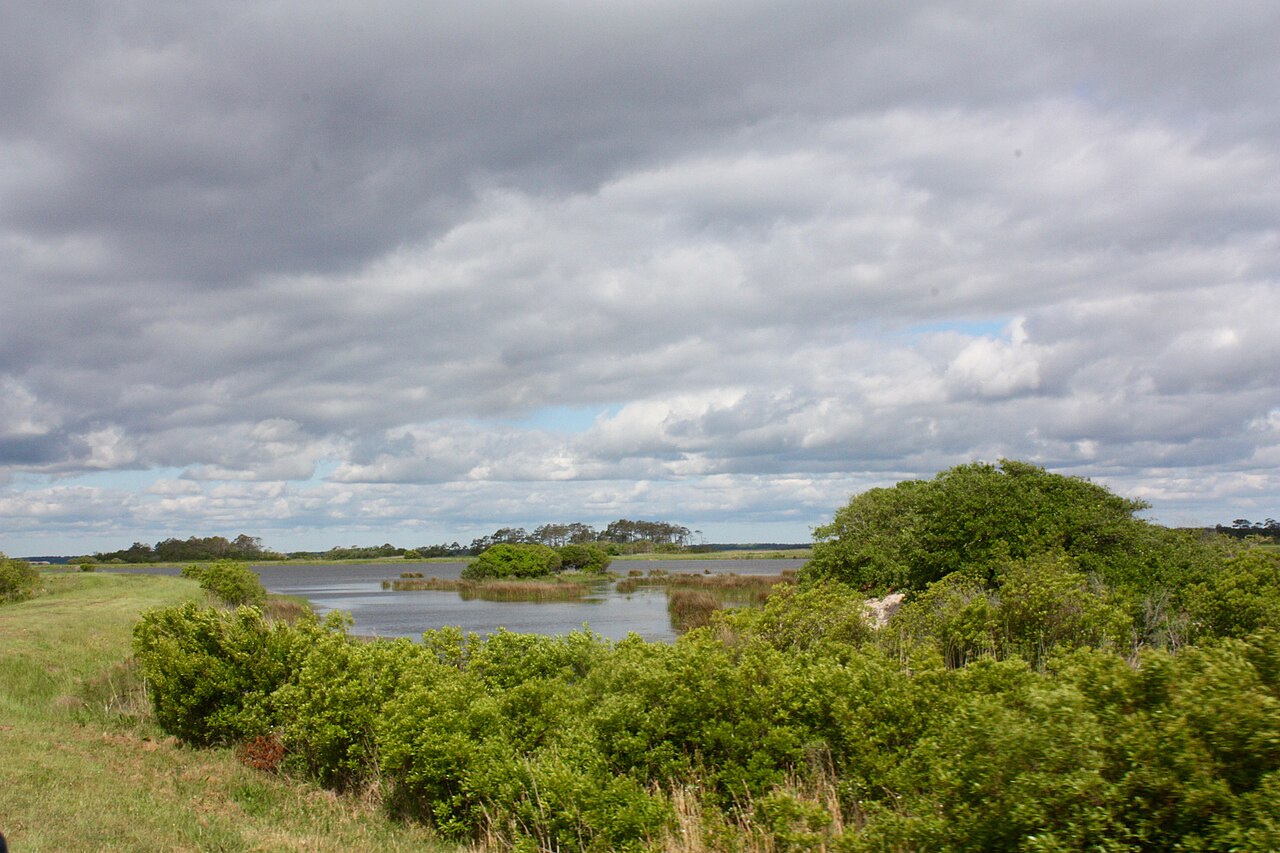
Sgt. Aaron Whitlock, USAF. Forty-one at the founding. Not commissioned, and therefore irregular in the company of eight officers, but installed by Wexler over the objections of Voss and Aldiss on the grounds that the working group needed a driver, a sergeant of arms, and a man whose presence at the perimeter of every meeting would not require a cover story. He drove Wexler to False Cape on the Tuesday morning of 26 September 1961 and waited at the car. He retired in 1974, died in 1996 in a Tennessee nursing home, buried with a marker that says, by his own instruction, only his name and dates.4
- Lt. Col. ▆▆▆▆▆▆, USAF. The ninth officer. Forty-something at the founding; the precise age has been withheld at the family’s request, which the apparatus has honored across the sixty-two years since his death. The redaction is conventionally written, in working-group documents from 1965 onward, at six characters — the convention I adopt here, also used in Carlyle’s memoir, the 1962 Wexler inquiry, and the 1998 partial release. I take its consistency across those three sources as evidence that the convention was deliberate at the founding and has been kept. He was the working group’s NATO liaison. He died on the night of 19 November 1964, at the foot of a hotel in Geneva, in what the Swiss authorities recorded as a fall from a sixth-floor window. He had not been listed as attending any NATO function that week. The Swiss did not press. The working group did not press. He is the fifth of the six.
That is eight named and one redacted: the nine. The working group of 1956 was not unusual in its composition by the standards of the postwar national-security state. Nine officers of this generation, with these resumes, were the standard furniture of the standard compartmented program. What was unusual was the work.
IV. The Losses, 1959–1968
The working group’s first sixteen years cost it six of its nine. The contemporary apparatus, in its internal reviews — the 1973 closeout document, the 1987 retrospective, the 2014 historical-foundations packet AARO inherited from AATIP — has treated the 1959–68 attrition rate as a structural mistake. The phrase used in the 1973 closeout is somewhat blunter. I will not quote it.
The structural mistake was not the protocols, which were what they could be given the period. It was the staffing pattern. Nine officers, each individually load-bearing, each individually exposed, in a working environment where the cost of any single officer’s failure could be borne — in the early period — only by that officer personally. Pierce, Mead, Wexler, the ninth officer, Reston: five of the six in nine years. Aldiss was the sixth, and the apparatus has treated his coronary as the only one it cannot trace to the work, though I notice it says this with a confidence a historian of comparable institutional periods would not necessarily share.5
The losses were not mysterious. Every one of them is consistent with what a reasonable observer of an institution under load would expect, and Wexler’s death in particular, however much the working group would later understand it as something other than the accident the Norfolk inquiry concluded, occurred at a time and in a manner the staffing pattern made foreseeable. The losses were also not impersonal. These were officers who had wanted — Carlyle is the witness, and his witness is unimpeachable — to do the work and live the lives they had been promised when they signed the papers in their early twenties. They were not crackpots. They were not heroes either; they were the kind of men whose names appear on the bronze plaques in the lobbies of buildings that no longer exist.
The 1973 closeout classifies the four “external” deaths — Pierce, Wexler, the ninth, Reston — as work-related. Mead’s suicide is ruled “indeterminate.” I am not in a position to revise the 1973 ruling. I record it because the reader is entitled to know that even the institution’s own retrospective could not decide whether the second of the six was work or grief or something the protocols at the time did not give Mead a way to discharge.
One further death I will note in passing. In the summer of 1963, between Mead and the ninth officer, the wife of one of the surviving founders took her own life, in the family kitchen, on a Sunday afternoon, in circumstances the working group’s later review did not attribute to the work but the surviving founder himself, in his retirement, attributed to it without reservation. He would say, when the subject came up, the wives were on the working group too. They were just on it without being told they were on it. The historian’s view is that he was right.
V. The Stabilization
By the spring of 1972, the working group had been reduced from nine officers to three: Carlyle, Voss, and a third officer whose name appears in the 1973 documents but whose service I am asked not to associate with the working group in any text the public may read.
It was also, by 1972, an institution. The structural innovations that had emerged over the previous five years — partly under Voss’s quiet pressure, partly under the operator side’s increasing willingness to formalize what had been ad hoc — are the innovations on which the contemporary apparatus runs. Five deserve naming.
First: the written instrument. What had been a series of specific partial undocumented exchanges committed to memory by both sides became, between 1970 and 1972, a written instrument. It is not a treaty in the sense the State Department would recognize one; it has no preamble, no signatories in the conventional sense, and no provision for amendment. It is a set of standing accommodations, articulated in numbered sections, both sides have agreed to honor and to review at multi-decade intervals. The first interval was designated PCT-0001 and ran from 1972 to a date the apparatus considers a working secret. The cycle numbering has been continuous since. The current cycle is PCT-0173, which means the founding-generation accommodation has been renewed one hundred and seventy-two times in fifty-three years. I will not work through what that implies about the actual length of a cycle. The arithmetic is the chapter’s most important footnote.6
Second: AM-12.4. The procedural specification governing the maintenance procedure on a registered subject was first issued in November 1954 by one of the predecessor groups, in a form surviving only as a single carbon in the footlocker. Reston rewrote it in 1959. Voss rewrote it again, in 1969–72, with Reston’s surviving notes and with input from the operator side the apparatus has never publicly acknowledged receiving. It has been revised three times since — most recently, as Rev C, in 2019 — but the bones of the document, including the Petri-net structure (P1 through P8, with P9 added in 2004), are Voss’s bones, sketched at a desk at Wright-Patterson in the year Carlyle was packing for Vermont.
Third: the surface-handler / liaison-officer split. Before 1969, working-group officers performed both functions. Wexler, on his last day, did both: he was the liaison officer at the meeting and the surface handler walking south along the perimeter road afterward, alone, with no protocol governing his return. After 1969 the roles were separated. The liaison officer attends the meeting; the surface handler manages the substrate-side work — the periodic procedures on registered subjects, the redaction-array calibrations, the leak containment — that the meeting’s agreements call for. It is the single most important structural innovation of the late period, and the one the apparatus, in its 1973 retrospective, identifies as the one that would have prevented Wexler’s death if it had been in place in 1961. I am not sure the apparatus is right about this. I record its view because the view has had the policy weight one would expect.
Fourth: the disinfo apparatus. What would later become the Sentinel Cartograph line of contractors was originated by Voss in 1971, with the standing-up of a small contractor in the Reston/Tysons corridor whose name is no longer on any building. Its founding mandate was the maintenance of what the working group called stigma cover: ensuring the topic would remain, in public discourse, available only in registers in which it could not be taken seriously. The Bennewitz operation of 1979 — the founding operation of what became the Dulce mythology — is the contractor line’s first famous engagement and the one on which the apparatus’s contemporary practice was substantially shaped. The Bennewitz precedent produced AM-12.4’s P6 erratum in 1988 and, in a chain of inheritance the reader will trace in a later chapter, the Lampreysong engagement of 2024.
Fifth: the institution’s own self-understanding. This is the hardest of the five to date and the most important to record. Sometime in the early seventies — Carlyle places it at a porch conversation with Voss in the summer of 1972 — the working group stopped thinking of itself as a working group and started thinking of itself as an institution. A working group is convened to address a problem; an institution exists to perpetuate the conditions under which a problem can be managed indefinitely. The 1956 founders had assumed the work would be intense and short, that the constituency would either become an openly-acknowledged fact of public life within a generation or would withdraw, and that in either case the working group would, within Carlyle’s professional lifetime, have either disclosed itself or disbanded. By 1972 it was clear that neither outcome was going to happen.
The accommodation was stabilized, in other words, not by the formal instrument of 1972 — the written sections, the cycle numbering, the protocols — but by that moment on the Fairborn porch, when two surviving officers acknowledged to each other that they were now operating an instrument they did not expect to retire. The instrument has not been retired. It is operating now.
VI. The Founders’ Question
Carlyle and Voss conducted the working group in the belief that they were doing the work that needed to be done by the men who were available to do it. They did not think of themselves as exceptional. They thought of themselves, in Voss’s phrase, as a bridge crew — a small team keeping the lights on across an interval in which the public-facing structures of the national security state were not yet adequate to the work. They expected, when they retired, that the bridge crew’s function would pass into whatever public or quasi-public institution would inherit it.
This is not what happened. The apparatus inherited the bridge crew’s working assumptions and converted them, by the slow accumulation of institutional momentum the United States government has been particularly good at since 1947, into permanent features of the way the work is done. The 1972 protocols are still the 1972 protocols, with revisions. The surface-handler / liaison-officer split is still the split. The Sentinel Cartograph line is still the contractor line. None of these has been seriously revisited in fifty-four years. The bridge crew’s bridge has become the road.
This is the moment where I am supposed to say something about whether the founders were right or wrong, and I am not going to. They made a working call, and the working call has been working for fifty-four years. The question I cannot answer — and am leaving open on purpose — is whether the working call is still working. The accelerating events of the present period, which Part IV will treat properly, are that question.
Carlyle, in his memoir, says they were honorable officers who built what they could build with the materials and personnel and time they had. I agree. Lorenzo, in his Tonopah notebook, says of Carlyle that the man’s accounting was good and that he hopes his own has been too. The operator side, by Lorenzo’s own report, attended his last cycle by a technician whose presence at his first cycle in 1970 he had not been able to recover until the night of 13 October 2019. There is a symmetry in that fact which Lorenzo found, at the end, consoling. The institution the bridge crew built has not been a single instrument played by one side; it has been the same instrument, played by both, for as long as either side has been able to remember.
Institutions, once founded, are very hard to retire. The working group of 1956 stopped being a working group in 1972 and started being an institution, and what an institution is, by definition, is something that has lost the capacity to imagine its own end.
-
The safe was a Mosler Class 5, double-key, manufactured at the Mosler Safe Company’s Hamilton, Ohio plant in 1953 or 1954. It is one of the few physical artifacts of the founding period whose history can be tracked with confidence — it followed the working group through three buildings before being decommissioned in 1981. The bolts that made Carlyle’s small soft mechanical sigh were, by then, worn enough to need replacing. The fact that someone in the apparatus thought to record the replacement, in a maintenance log that survives, is the more interesting fact. ↩
-
There is a temptation in writing this kind of chapter to want to write better than the memoirist one is necessarily ratifying — to demonstrate, by the coldness of one’s dating, that the historian’s instrument is the better instrument. Carlyle’s instrument was a man who was there. Mine is a man who is not. The two instruments measure different things. ↩
-
A small disagreement with my own main text. I wrote, above, that the constituency is almost certainly a term Carlyle inherited from an earlier officer. In the days since writing that sentence I have been unable to find any documentary evidence the term was used before April 1956. It may be Carlyle’s coinage. If it is, then one of the small but real intellectual contributions of the working group’s first chair-deputy was to give the apparatus a register in which the operator side could be referred to with the seriousness one reserves for a peer institution rather than the wariness one reserves for an adversary. I record the disagreement because the alternative is to pretend the documentary record is firmer than it is. ↩
-
Whitlock’s nursing-home death was the only death of the original nine in which the apparatus had any institutional presence at the end. Two surviving handlers from the working group’s late period attended unofficially; one of them was Voss’s successor. The marker is in a cemetery in Lawrence County, Tennessee. I have stood at it. ↩
-
The 1973 closeout’s confidence that Aldiss’s coronary was unrelated to the work is, in my private opinion, less defensible than the document presents it as being. Aldiss had been the working group’s liaison to the DCI for ten years. He had also, in 1965 and 1966, been carrying — by an inference I draw from the gap in the document record where his correspondence with the DCI’s office should be — a load the working group had not been formally aware of and that he had not, on the available evidence, been able to share with Voss. A coronary in a Pentagon parking lot at forty-four, after a decade of carrying that load, is not a death I would confidently classify as unrelated to the work. I have nothing better than an inference. I record mine because the apparatus recorded theirs. ↩
-
I will spare the reader who has not done the arithmetic. One hundred and seventy-three cycles in fifty-three years is, on its face, a cycle of approximately 3.7 months — absurdly short for any reasonable definition of multi-decade accommodation-posture period. The resolution is that PCT-0173 is not the 173rd renewal since 1972; it is the 173rd designation in a numbering system whose earlier members refer to predecessor arrangements from the 1947–55 period that the working group inherited and renumbered in 1972 in order to give the contemporary cycle an institutional pedigree it would not otherwise have had. The numbering is partly a fiction the founders chose to inherit on purpose: they wanted the current cycle embedded in a sequence rather than appearing as a new arrangement. The choice was characteristic of the period. It has the effect, in the contemporary literature, of making the apparatus appear older than it is by a factor of roughly four. The reader is invited to keep this in mind whenever a document inside the apparatus refers to the cycle with a definite article. The definite article is doing institutional work the article does not announce. ↩
Supporting content
No supporting content yet.