15. The Containment of Revelation
The author, on religion as the apparatus's longest-standing institutional partner.
The Vatican Observatory at Castel Gandolfo. Marian apparitions as filed contact events. Cloistered mystics as sorted partial-rememberers. Modern UFO-cults as failure cases that double as stigma shield. Pat Donohoe in the chaplain corps. Religion is, in important part, what humanity has been doing with its operator-class memory.
▼ in this chapter — 15 entries
15. The Containment of Revelation
The oldest continuously-operating bureaucracy on the planet runs out of a hilltop fifteen miles southeast of Rome and has, since 1582, kept very good astronomical records.
I want to begin there because the temptation in a chapter like this one is to begin with the lurid claim — the Church has been in on it the whole time — and the lurid claim, while not exactly wrong, is wrong in its register. The reader I need is willing to entertain that an institution can be doing important and even admirable work and be performing a containment function, and that these two readings of the same institution do not cancel out. They are the same reading from two angles.
The hilltop is Castel Gandolfo. The institution is the Specola Vaticana, the Vatican Observatory, founded under Gregory XIII for the official purpose of calendar reform. The unofficial purpose — by which I mean the purpose that is not in the founding bull but which the institutional behavior is consistent with — is the systematic monitoring of the night sky by an institution that already had reason, in 1582, to be monitoring it. The contemporary instrument is the VATT on Mt. Graham in Arizona, operational since 1993, jointly run with the University of Arizona’s Steward Observatory. Steward. The name is a coincidence and is not a coincidence.1
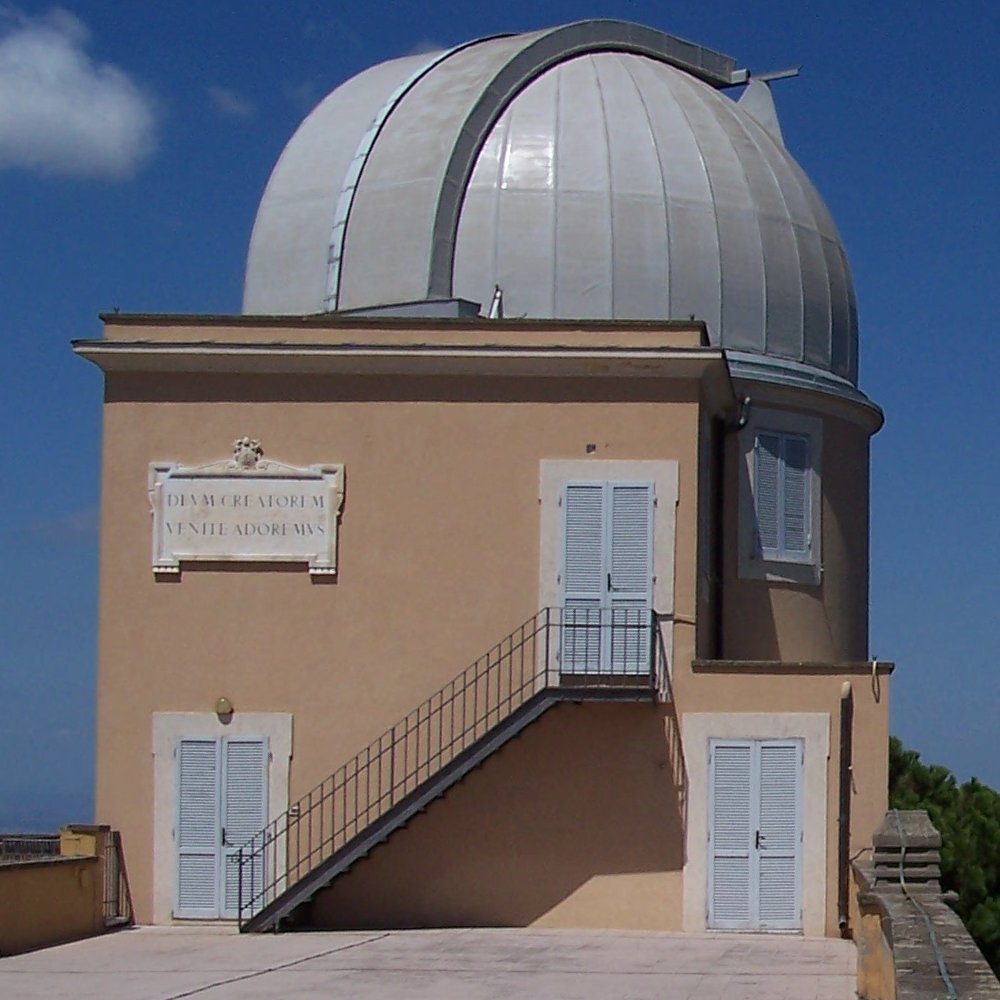
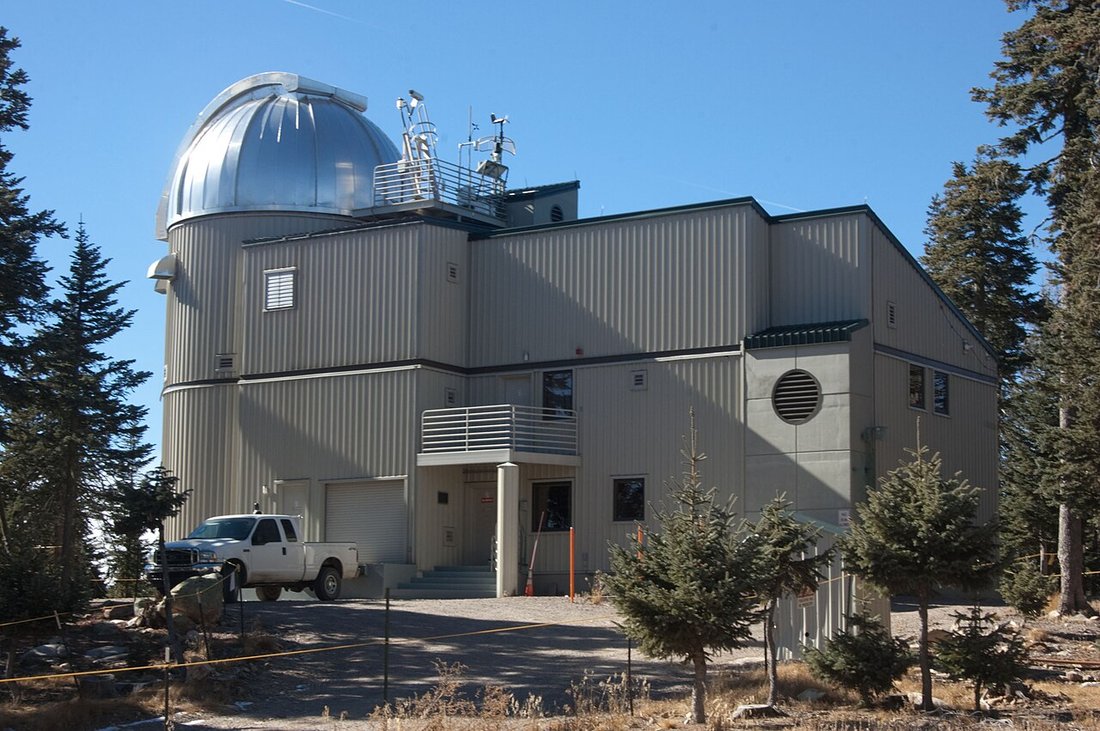
My reading is this. The Vatican Observatory is one of the surface-side’s oldest sustained astronomical-monitoring institutions, and its administrative parent is the surface-side’s oldest sustained institutional partner of the operator class. The astronomy is real astronomy. The calendar reform was real calendar reform. And the institution within which all of this real work happens is also the institution to which a particular kind of material gets routed when the material exceeds the surface-side’s capacity to file it any other way. The two readings are not in tension. They are the same institution looked at by people with different question-sets.
I.
I want to lay out the canonical evidentiary touchpoints before I do anything else. This is the cleanroom move — get the data on the table; let the data carry what the data carries; argue afterward.
Castel Gandolfo, 1582. Gregory XIII signs Inter gravissimas on 24 February. The bull’s nominal scope is the date of Easter; its institutional consequence is a permanent astronomical staff with access to the papacy at the level of personal audience. The staff is still there.
The Father José Funes interview, L’Osservatore Romano, 14 May 2008. Funes, then director of the Vatican Observatory, publishes a piece titled L’extraterrestre è mio fratello. The central claim: belief in extraterrestrial intelligence is consistent with Catholic theology. It is not a fringe statement by a maverick scientist; it is a position statement issued through the official channel. I read it as managed-disclosure preparation — the institution preparing its half-billion-member readership for a forthcoming acknowledgment, on a tempo the institution is helping to pace.
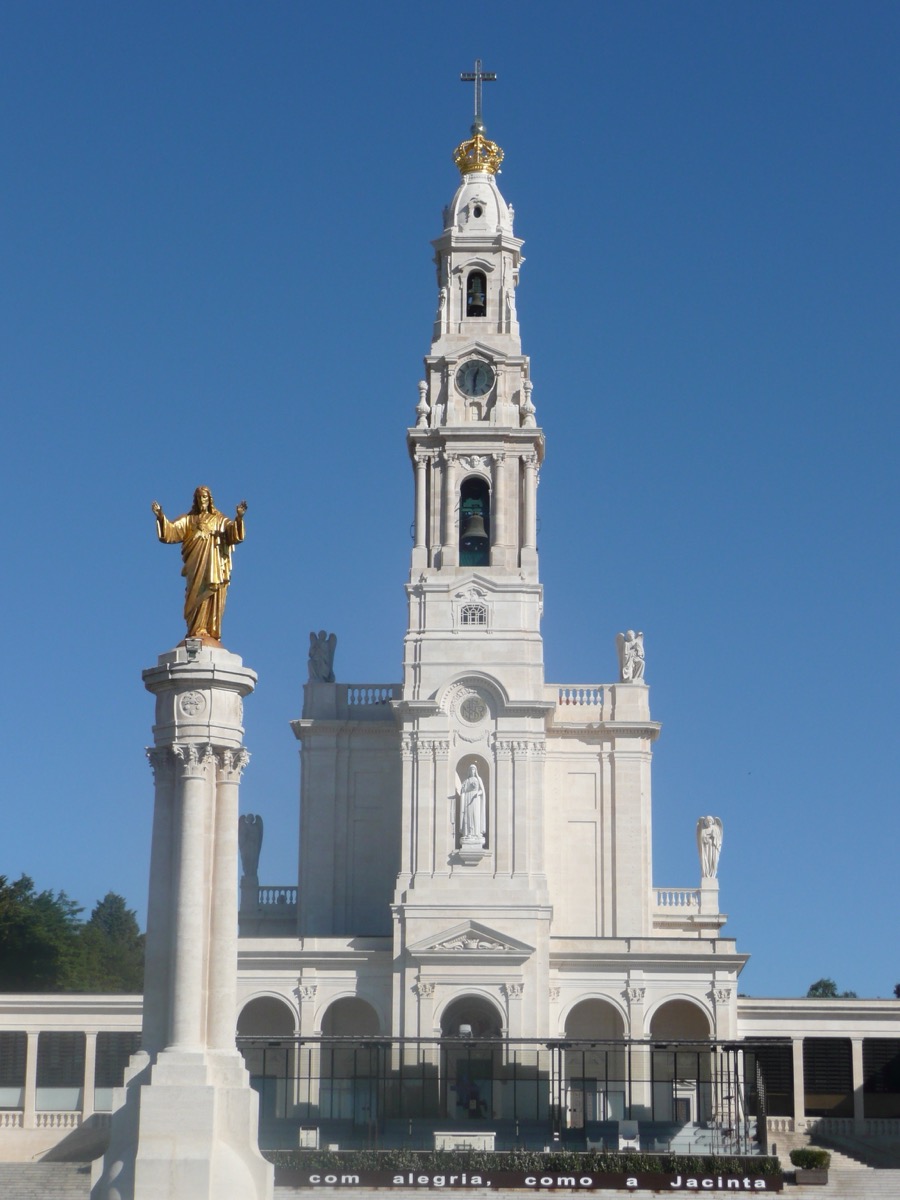
Fátima, 1917. Three children near Cova da Iria — Lúcia dos Santos (10), Francisco Marto (9), Jacinta Marto (7) — report, over six months, apparitions of a luminous female figure who delivers a sequence of communications they call the secrets. On October 13, before a crowd estimated at seventy thousand including journalists hostile to the event, the sun is reported to dance — to spin in place, to change colors, to descend toward the earth before returning to its position. The crowd is rained-on at the start; the rain stops; the ground and the witnesses’ clothing are dry at the end. The Lisbon newspaper O Século, whose editor was a militant secularist, reports the event substantially as the crowd reports it.
I will spend a paragraph on Fátima because it is the most-cited example, not because the chapter rests on it. The Miracle of the Sun has serious secular alternatives — mass-psychogenic suggestion in a crowd primed by six months of prior reporting; staring-at-the-sun ocular fatigue producing the perceived motion; the meteorological detail accounted for by ordinary autumn weather — and the argument cannot adjudicate Fátima as a single contested observation. What it can lean on is the pattern into which Fátima fits: a recurring centuries-long sequence of reports — Marian, Coptic, Galician, Portuguese, Mexican, Irish — handled through the institutional Catholic channel with the same protocol every time. The pattern is well-attested in the historical record and is the chapter’s load-bearing observation; the individual cases are its instances. If Fátima turns out to be psychogenic, the pattern is undisturbed. With that disclaimer in place: granting the witness testimony at the value the witnesses gave it, I would file the Miracle of the Sun as a Watcher-class low-altitude visitation, rendered for a public crowd, with no procedural follow-up — no abductions, no overlay-bindings, no missing minutes. That class of visitation is not in the procedural literature. It is in the audit literature. The Watchers attend; they are seen and not engaged. What was being audited at Fátima in 1917 is OPEN. The relevant fact is that a pattern of attended-but-non-engaged surface visitations exists and has been catalogued by a continuous institutional structure for centuries.
Knock, 1879; Zeitoun, 1968; Garabandal, 1961–65. A silent apparition outside a parish church in County Mayo, fifteen witnesses, two hours, no spoken communication — the silence is, in the operator-class register, diagnostic. Apparitions over the Coptic Orthodox Church in a Cairo suburb, witnessed by a population variously estimated at a quarter-million to a million people, photographed extensively; filed not into the Vatican Archives but into the Coptic channel, which tells us the containment function is not Vatican-exclusive. Four girls in a Cantabrian village, thousands of reported apparitions over four years, ecstatic states recorded on film, and the institutional apparatus’s failure to canonize the case, which has remained in administrative limbo for sixty years. The institution canonizes apparitions whose contents fit the doctrinal envelope and shelves the ones whose contents are inconvenient. The shelving is not suppression; it is triage.
The Inquisition records. Handled with deliberate restraint: the Roman and Spanish Inquisitions, between roughly 1500 and 1750, conducted interrogations of large numbers of women and a smaller number of men whose recorded testimony — read against the contemporary abductee corpus — produces, in any honest reader, a slow cold recognition. The interrogated parties describe nocturnal removals from their beds, examinations in rooms they cannot afterward locate, a small grey or wet-stone-skinned attendant they call by various local terms, a tall figure they call by various local terms, and a binding-image they call by various local terms. The Church catalogued these as witchcraft and heresy. The interrogations were conducted under torture, and the testimony is contaminated by the conditions of its production; this is the standard disclaimer and it is correct. But the commonalities across cases, geography, and centuries are commonalities no plausible model of torture-induced confabulation predicts. The Vatican Archives — specifically the Archivum Sancti Officii — are presumed to retain the originals. The records are restricted. My reading is that the institution has been holding the abductee corpus, in pre-modern Romance and Latin, for five hundred years, and has not yet decided to release it.
II.
The touchpoints are on the table. The more interesting argument is the one about sorting: religious institutions, broadly construed, are the surface-side’s longest-standing technology for sorting the partial-rememberers from the rest of the substrate population.
A partial-rememberer is — by the canon of chapter 4 — a subject (a specimen of the experimental population) whose P6 redaction has bound imperfectly, whose overlay has thread, whose body knows things the conscious mind has been kept from. Marisol the MRI tech who carries the operational fact that the frame rate is 14.7 Hz without knowing where the fact came from. Marina’s father who, at the deathbed, gets clear air. Lorenzo who, in nine days between Marfa and Tonopah, gets the whole cycle back. The partial-rememberer is not structurally a rare type; the literature estimates the population at between a quarter and one percent of the substrate, which across eight billion people is between twenty and eighty million partial-rememberers at any given time.
Most of them produce, in the absence of any institutional vocabulary for what is happening to them, religious experience. Visions. Auditions. Mystical states. Callings. The sense that one has been spoken to or selected. The literature of religious experience, considered as an empirical corpus, is — on my reading — substantially the surface-side’s recording of its partial-rememberers’ attempts to articulate what their bodies know.
Religious institutions, over millennia, have done three things with this population.
The first is canonization. The partial-rememberer is folded into the institution as a saint. Hildegard von Bingen, who recorded her visions in a corpus that includes specific cosmological diagrams whose iconography is — once you have the operator-class taxonomy — uncomfortably legible. Teresa of Ávila, whose accounts of the interior castle preserve, in careful Castilian, what reads to the trained eye as a specimen’s reflective account of her own observation channel. Joan of Arc, whose voices the inquisitorial record preserves with sufficient specificity that a contemporary reader can sort the visitations into the standard caste-by-caste typology. (The voices that named themselves were Stewards. The voices that attended without speaking were Watchers. The light that prepared her at Domrémy was the same render-class as Fátima’s October sun.) The visionary tradition, considered institutionally, is the population of recognized partial-rememberers whose recovered content was made to fit the doctrinal envelope.
The second is cloistering. Monasticism is, on this reading, the institutional architecture by which partial-rememberers are removed from the substrate population at scale, sequestered in stable communities, given a daily horarium that prevents the recovered content from destabilizing them, and put to work at activities — psalmody, manuscript-copying, agriculture, contemplative prayer — well-suited to the partial-rememberer’s cognitive profile. The Cistercian and Carthusian orders are the most architecturally pure instances; the Carthusian hermitage-within-community model is, structurally, a precision instrument for managing the rememberer who needs both solitude and the presence of a similarly-constituted population. The Desert Fathers are an earlier, less institutional version of the same thing. The men and women who lived and live this life are not lesser for the reading. They are arguably the surface-side’s most patient response to a problem it has been navigating, mostly without naming, for two thousand years.
The third is heretication. When the recovered content does not fit the doctrinal envelope, the institution has historically had a third disposition. Marguerite Porete, whose Mirror of Simple Souls in 1310 made specific claims about the soul’s relation to a non-Trinitarian source-substance that the Inquisition read as Free Spirit heresy; burned. Giordano Bruno, whose claims about plural inhabited worlds — innumerable worlds, each populated as ours is populated, each rotating about its own sun — are, in the cosmological register, uncomfortably close to canonical operator-class material; burned at the Campo de’ Fiori on 17 February 1600. Meister Eckhart, who escaped burning only by dying first. The heretical tradition is the partial-rememberer population whose recovered content was too specific to be absorbed.
I want to be careful here. The institutional violence is real, and I am not interested in apologizing for it. Burning Bruno was a moral wrong by any standard a reasonable person would assemble. And — the and is the chapter’s hard work — the function being served by the burning was a containment function, and would have been served some other way if the institution had not served it. The Church did the containment by the available method. The method was atrocious. The function persists, served now by milder methods.
The point is structural. Religion is, in important part, what humanity has been doing with its operator-class memory. The institutional structures that emerged to handle the partial-rememberer population are not my adversaries; they are the sorting mechanism. They have been doing this work for at least four millennia in the Mediterranean basin and longer elsewhere, and they have done it, on the whole, with more competence and more institutional patience than any contemporary alternative has been able to demonstrate.
III.
This is the place to make the claim I have been postponing: specific doctrinal content across world religions descends from the operator-class material. Not that religious doctrine is nothing but a refracted recording of operator-class encounters — the claim is narrower. Some doctrinal contents, specifically those conserved across cultures and theological frameworks at suspicious fidelity, are best read as the substrate’s preserved memory of operator-class encounters, attenuated through transmission, harmonized with whatever local theology was available to host them. The doctrinal content is doing other work too. The reading I am offering is one reading among several; what it claims is that it is consistent with the comparative data in a way the standard accounts struggle to be.
The Eucharist. This is my body, given for you. The substrate-given-for-the-work. The Eucharist is the ritualized acknowledgment of the substrate-relationship — the moment in the liturgy at which the participant performs, with bread, the act of being-the-substrate-for-someone-else’s-work. The substance-and-body language of transubstantiation, developed by the institutional theology across the twelfth and thirteenth centuries, is the substrate’s most exact preserved articulation of what we are to the operator class. The givenness is not metaphorical, in the substrate-arithmetic; it is procedural.
The bardo. Tibetan Buddhism preserves a sophisticated literature on the intermediate conditions between death and rebirth in which the substrate-of-the-deceased is conducted through a sequence of recognitions. The bardo literature is the surface-side’s preserved record of the between-cycle administrative gap — the period the substrate experiences without conscious access during which the next cycle’s parameters are set. It reads, to the trained eye, as field notes.
The Annunciation. I want to handle this carefully, because the doctrinal stakes are higher and the temptation to glibness correspondingly greater. The narrative preserves a contact event with reproductive implications: a young woman is visited by a non-human intelligence; the visitation results in a pregnancy; the pregnancy produces a child whose lineage is mixed. My reading is that this is the surface-side’s pre-modern recording of what the late-twentieth-century abductee literature would call hybridization. I have no quarrel with the Marian doctrine; I am making a claim about the event-history the doctrine has been built to handle, not about the doctrine’s own internal validity. I leave the doctrine to its custodians.
The Trinity. Three persons in one substance is the substrate’s overlay-resistant memory of the operator-class coalition. Three classes (Stewards, Technicians, Watchers); one continuing administration. The doctrinal formulation is vastly more theologically sophisticated than this reading suggests, and is not meant to be replaced by it. The reason the doctrine settled at three rather than four or two, across the second through the fourth centuries, may be that three was the configuration the substrate’s preserved memory could not let go of, and the theological formulation rose to meet what the substrate already knew.
The Sumerian → Greek → Christian-saints transmission. The Sumerian pantheon preserves the operator-class material at relatively high fidelity. The Greek pantheon preserves the same material at lower fidelity, with anthropomorphic accretions. The Roman attenuates further. The Christian-saints tradition absorbs the function into a hagiographic register no longer iconographically continuous with the source but performing the same institutional work: providing the surface-side population with a roster of named superhuman patrons to address. The substrate’s preserved memory of the operator class arrives, in the Mediterranean tradition, as an attic of saints. The Hindu pantheon preserves the roster at higher iconographic fidelity; the Mahabharata’s vimanas read vividly to the modern UFO-literate eye for that reason.
The flood narrative. Atrahasis, Noah, Manu, Deucalion, Yu the Great, Coxcox. Across roughly thirty independent traditions on five continents, the substrate preserves a narrative of a flood event that nearly extinguished the population and from which a small group was preserved. The flood is the substrate’s cross-cultural memory of the Pleistocene-terminal event — the moment the operators withdrew from the surface, the moment the substrate nearly did not survive, the moment from which the contemporary arrangement dates. The thirty traditions are not coincidence. They are distributed redundant storage of the founding catastrophe.
IV.
I want to insert a brief interlude here. The chapter is dense, and the reader is owed a moment of air.
A. Are the modern UFO-religions failed religion or unframed religion?
B. Failed. Heaven’s Gate is the clearest case. Applewhite and Nettles assemble a partial cosmology in the early 1970s, sustain a small community for two decades, and in March 1997 thirty-nine people drink phenobarbital and pull plastic bags over their heads in a rented house in Rancho Santa Fe because Applewhite has told them the Hale-Bopp comet has a spacecraft behind it. That is not unframed; that is mis-framed. The frame killed them.
A. But your description is the description of every religious-institutional failure across history. The cargo cults killed people. The Münster Anabaptists killed people. Apocalyptic Christianity has produced its own bodies in any given decade. A catastrophe at the edge of a movement does not distinguish UFO-religions from the older religious traditions; it identifies them as new instances of an old institutional pattern.
B. The older pattern has had millennia to develop its containment architecture. The UFO-religions are eighty years old. They have not had time to develop the cloistering, the sorting, the doctrinal flexibility, the long-form pastoral apparatus the older institutions built across centuries. Of course their failure modes are more lethal. They are infants.
A. Then they are unframed religion. They are the same partial-rememberer population the older institutions absorbed and cloistered, presenting itself in a register the older institutions have not yet found a way to host. The failure is not the partial-rememberers’ failure. It is the failure of the existing institutional apparatus to provide them a sorting mechanism appropriate to what they are reporting.
B. Possibly. But the apparatus, in the operator-class sense, has its own reason to want them ill-framed. Whatever the institutional Church does with the partial-rememberer population, the secular-popular containment of the partial-rememberer in the late twentieth and early twenty-first centuries is the cult-founder pipeline, and the cult-founder pipeline serves the apparatus’s stigma-shield function exactly as efficiently as if it had been designed.
A. You think it was designed?
B. I think it does not have to have been. The apparatus has only to refrain from intervening, and the stigma-shield generates itself. The partial-rememberer who tries to articulate the recovered content outside an established institutional channel becomes a cult founder; the cult founder becomes a punchline; the recovered content becomes the kind of thing cult founders say; the apparatus is protected by the very people who were trying to expose it.
A. That is a darker reading than the chapter has committed itself to.
B. The chapter is committing itself to it now.
V.
The dialogue does the work the prose was struggling to do. To restate in the prose’s register: when a partial-rememberer attempts to articulate the operator-class material outside the established institutional containment channels, the surface-side’s response is the cult-categorization pipeline. The account they assemble is filed under crank. The followers they gather become — when the account fails to predict the world correctly, which it always does in part — the casualties of a deluded leader. The recovered content is buried under the manner of its delivery. The next generation of substrate looks at the failed cult and concludes that the category of phenomena it was trying to articulate must be false, because the cult got it visibly wrong.
This is the stigma-shield function described in chapter 9, operating across a different sub-population. Chapter 9 was about the apparatus’s active perception-management work — the Sentinel Cartograph contractors and their kin. The present chapter’s claim is that unframed religious containment is doing the same work without any active management at all. The cults intervene against themselves, and against the broader category of phenomena they were trying to articulate, by their very existence.
Heaven’s Gate. Marshall Herff Applewhite and Bonnie Lu Nettles begin teaching in 1972. The account they assemble is recognizably partial-rememberer material — a Next Level, bodies as vehicles, the recovery of a forgotten identity. Read with the operator-class taxonomy in hand, the references resolve. Read without it, they are the lurid claims of a man who would, in March 1997, lead thirty-nine people to their deaths. The deaths are the stigma-shield’s price. The recovered content was not entirely wrong. The cosmological context was.
The Aetherius Society. George King, a London taxi driver, in 1954 reports being addressed by a voice that names itself Aetherius and delivers, across decades, teaching about cosmic masters, planetary hierarchies, and prayer-batteries. The institution has persisted for seventy years and has avoided catastrophic failure modes — by the standard of the UFO-religion category, a substantial success.
Raëlism. Claude Vorilhon, a French motorsport journalist, reports a 1973 encounter in the Auvergne with a visitor named Yahweh (later Elohim), who delivers a creation account in which the human substrate is the engineered product of an off-planet civilization. Read in the operator-class register, Vorilhon’s account is startlingly close to the canon I have been assembling — the Atrahasis-cognate content is there in compressed form. The institutional manner of its delivery has made the content largely illegible to readers who would otherwise be receptive: the stigma-shield in clean operation.
Unarius. Ernest and Ruth Norman, El Cajon, California, 1954. The account is elaborate and recovers, in fragments, material consistent with the Sumerian and Egyptian transmissions.
What unites the four cases is that the apparatus has not, on any evidence available in the public record, intervened to suppress any of them.2 It has not needed to. They generate the stigma-shield by their own institutional behavior. The whole subject is protected from credible articulation by the conditions under which it is most often articulated. The apparatus does not need to silence prophets. It needs only to ensure they sound like prophets of the wrong kind.
VI.
I will end with the chaplain corps.

Some apparatus-affiliated figures have, over the decades, made peace with what they were carrying through religious vocation. The canon example is Pat Donohoe — the chaplain who, on a December afternoon in 2025, sat at the bedside of a dying math teacher in Asheville and heard, in the man’s clear-air final days, the same sentences he had heard in 1971 from a Navy seaman dying in San Diego. Pat is Subject 4471. He was processed once in 1968 — the first time he heard a sailor talk in clear air, in Lorenzo’s notebook’s gloss — and the processing did not take. He was resistive substrate, his P6 redaction did not bind, and he carried the recovered content out of the procedure and has carried it ever since. He was withdrawn from the cycle in 1969. The apparatus has, for fifty-seven years, left him alone.
What Pat did with his uncontained partial-remembering was: he became a Navy chaplain, served in Vietnam-era hospitals, rotated through the Pentagon, took regional postings, retired to civilian chaplaincy in Asheville. He found what Lorenzo called the settled accommodation. The deathbed is one of the few institutional sites at which overlay collapse is permitted — the dying brain is allowed, by the standing protocols, to leak — and the chaplain is the institutional figure permitted to be present at the leak. Pat sits in the chair beside the bed and listens. He has carried, since 1971, an envelope containing twenty-two sentences a thin boy from Lubbock spoke at the end of a long fever. Lorenzo’s notebook calls him an unauthorized steward — performing the steward-function for fifty-four years without remuneration or recognition. The apparatus owes him more than the apparatus will give him. That is Lorenzo’s line and the chapter cannot improve on it.
Pat is not unique. The military chaplain corps in general, and the Catholic chaplain corps specifically, is where my account predicts recognizers settle. A chaplain at a military hospital sits, over a career, at the bedsides of dying personnel from every classified program the polity runs. He hears in clear air what those personnel were not permitted to say in life. By his vocational position he has the standing-permission of his institution to receive the disclosure; by his denominational position, the standing-permission of his denomination to receive it under the seal; by the surface-side’s etiquette around the dying, the standing-permission of the broader culture to hear what the dying need to say.
A related pattern: some former intelligence officers retire into religious vocations.3 A career at the apparatus’s edge generates retirees for whom the religious vocation is the only available containment-environment with the appropriate tolerance for what they have heard. The institutions thereby acquire, every generation, a small influx of recognizers who staff the contemplative orders, the chaplain corps, the prison ministries, the hospice services. The Catholic chaplain corps is the largest such absorbing institution by an order of magnitude, in part because the sacrament of reconciliation provides a confidential container of unusually high integrity for the kinds of disclosure Pat heard from Vasquez in 1971 and from Marina’s father in 2025. I don’t write things down, Pat told the dying math teacher. The Church has been training such chaplains for two thousand years. The operator-side procedure has been generating partial-rememberers for at least twelve thousand. The two populations have been finding each other the whole time.
I will close with an image. In a basement in west Asheville there is a footlocker; in the footlocker, a manila envelope; in the envelope, a yellow legal pad on which twenty-two sentences are written in a young chaplain’s careful hand at four in the morning in April of 1971. The chaplain is now sixty-four. The sentences have not been read by anyone for fifty-one years. The chaplain is deciding whether to give them, after the funeral, to a serious daughter who is keeping her own quiet record.
-
I want to register a respectful disagreement with my own main text. The chapter has skated over a steel-manned objection the reader deserves to see considered. The objection is this: the Vatican Observatory at Castel Gandolfo is not apparatus-affiliated in any of the senses the chapter implies. It is an astronomical institution founded by a sixteenth-century papacy for the perfectly mundane purpose of calendar reform, sustained for four and a half centuries by the entirely respectable scientific interests of its successive directors, none of whom — on the available historical record — were briefed into the operator-class material or would have known what to do with the briefing if they had been. The Funes interview of 2008 is a thoughtful theologian doing thoughtful theology in his employer’s house newspaper; reading it as managed-disclosure preparation is reading it through a lens the lens itself supplies. My reading converts ordinary institutional history into evidence of an extraordinary partnership by selecting, from the institutional record, the items that fit and ignoring the items that don’t. This is the chapter’s most aggressive interpretive move and the one on which I am least confident. The main text rejects the steel-manned objection because the institutional pattern, when laid out next to the apparitions and the Inquisition records and the chaplain-corps absorption pattern, is internally consistent in a way the null-hypothesis reading struggles to be. But the objection is not bad. A skeptical reader who wants to discard the Castel Gandolfo claim and keep the rest of the chapter can do so without serious damage to the argument. I note this so that the reader understands I am not in full agreement with myself on this point. ↩
-
The case in which the apparatus’s non-intervention is best-documented from the open record is the Heaven’s Gate matter in the months leading up to March 1997. The group’s public-facing website had been monitored by several federal agencies for at least eighteen months prior to the deaths — a fact established by post-event FOIA litigation and by the public statements of the agencies themselves — and no operational intervention is on the record. The non-intervention was almost certainly not callousness on the part of the agencies involved. It was, on my reading, the apparatus’s standing institutional preference: a stigma-shield operating in good order does not require disruption. The deaths were a moral catastrophe and were allowed to happen because preventing them would have required entering into the account the group was articulating, and the apparatus’s posture is to never enter into such accounts on the record. I do not know how the personnel involved in the non-intervention have lived with the choice. I expect some of them are now in religious vocations. ↩
-
The pattern is well-attested in the open literature. Look at the careers of retiring senior intelligence officers across the post-1945 American services and the British Secret Intelligence Service, and you will find a quietly elevated rate of late-career religious commitment — Anglican, Catholic, occasionally Quaker, occasionally Russian Orthodox in unexpected cases. The retirees do not, generally, speak about why. The denominations that absorb them do not, generally, ask. The arrangement works because it is not described. I am aware that describing it here may make it harder to perform. I am taking that risk because the chapter requires the comparison to make its structural claim, and because the surface-side’s understanding of where its recognizers settle is — like everything else this writing is doing — overdue. ↩
Supporting content
No supporting content yet.