IncidentJapan Airlines Flight 1628 (17 November 1986)
aka Japan Airlines Flight 1628 (17 November 1986)
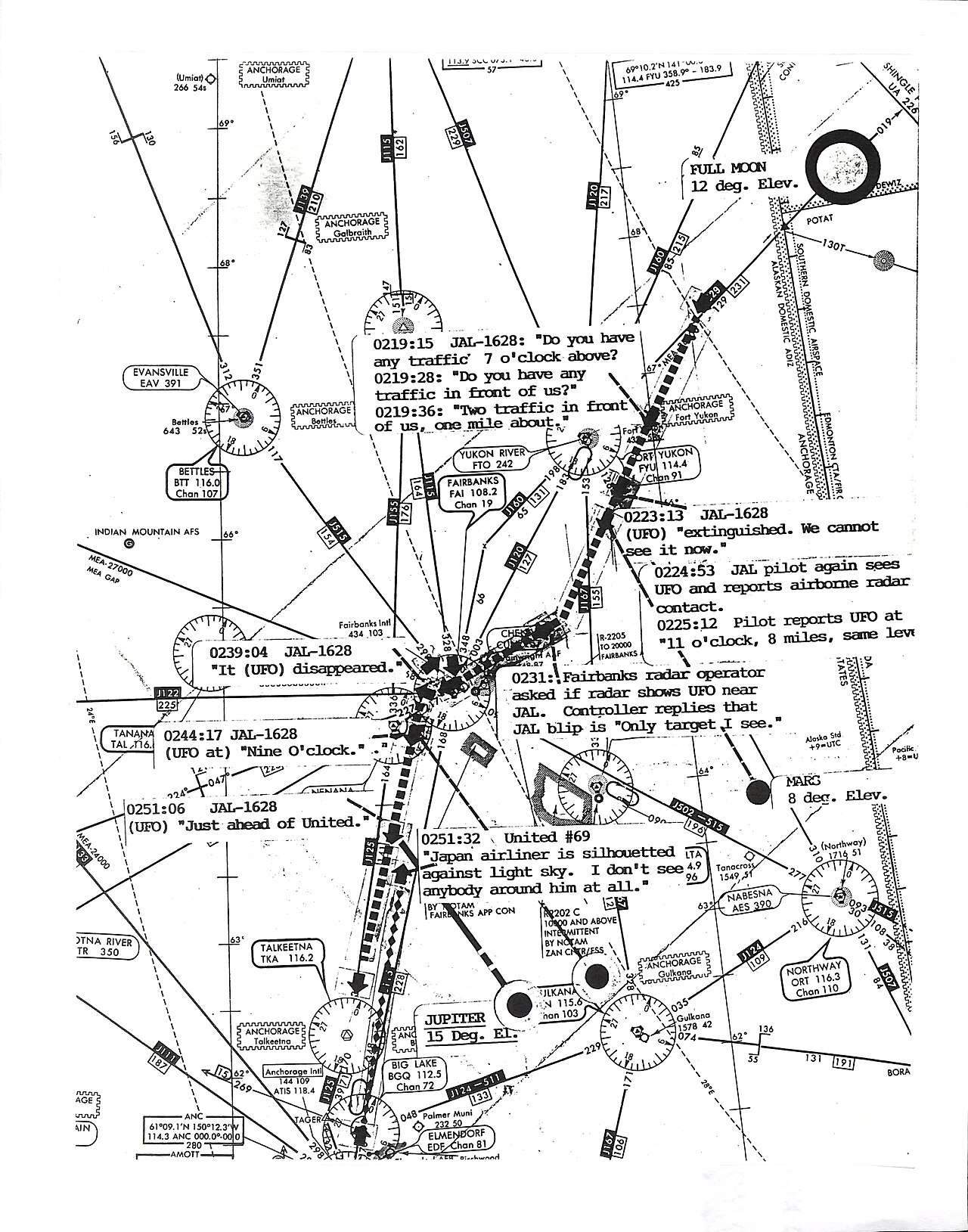
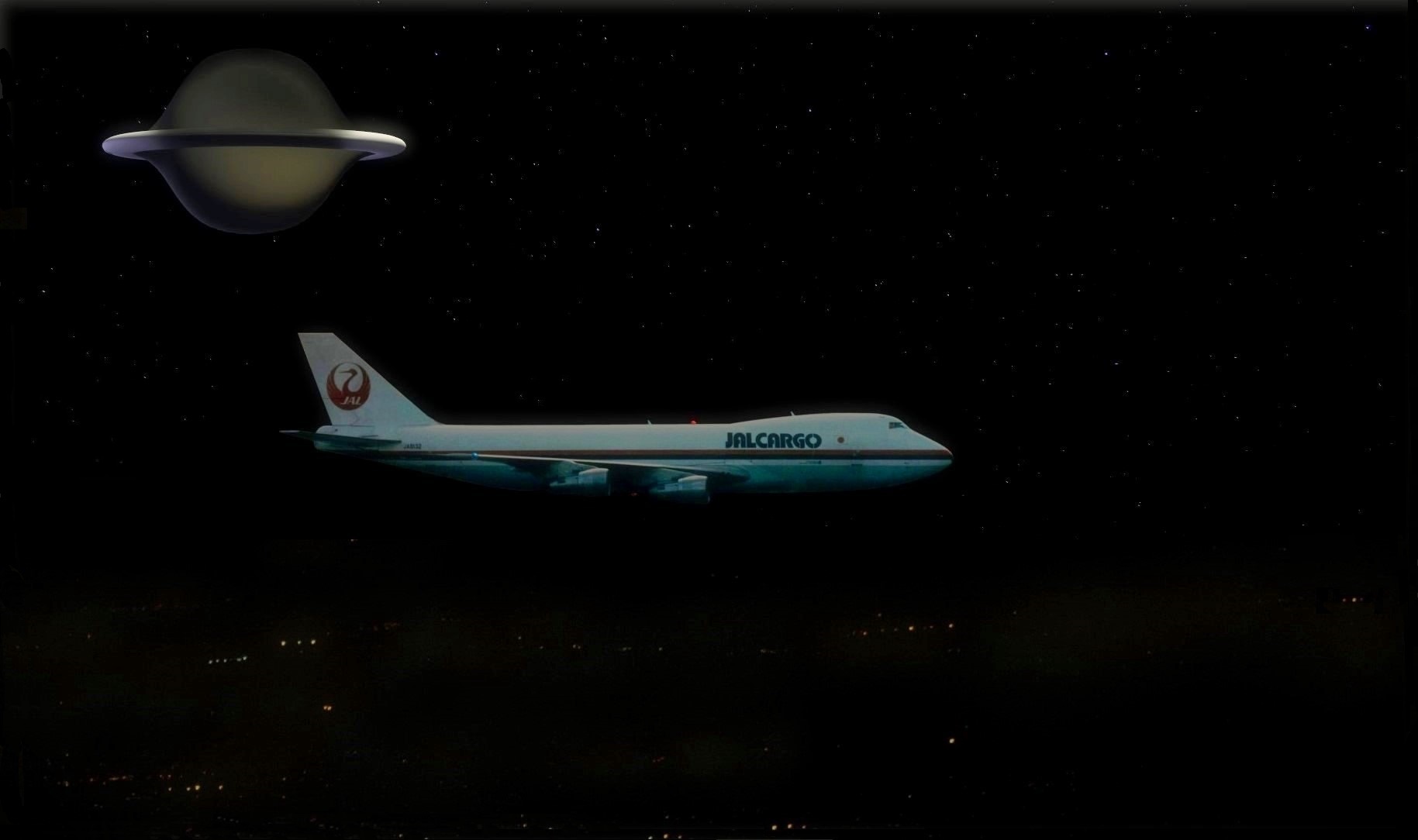
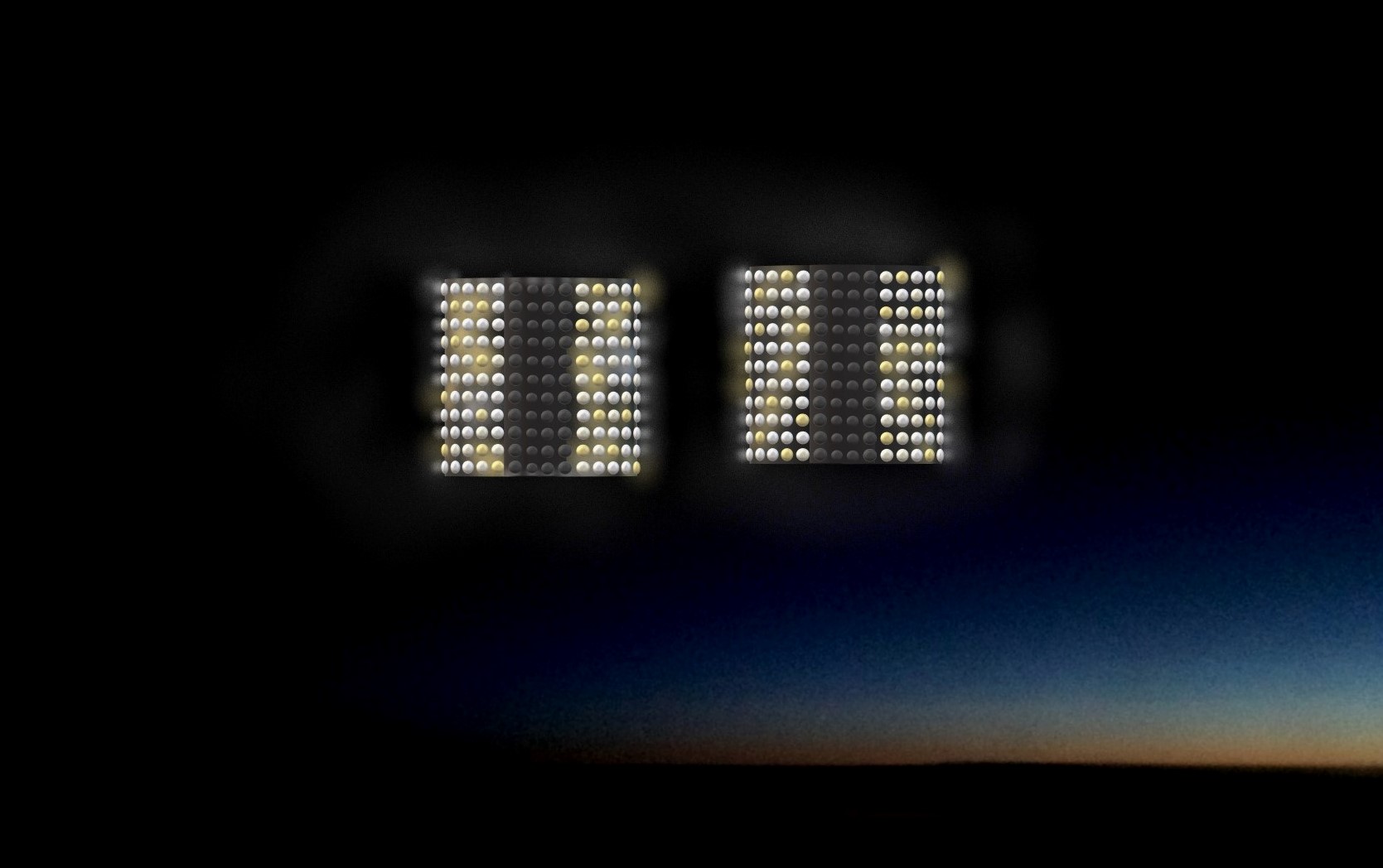
Captain Kenju Terauchi and the crew of JAL Flight 1628 — a Boeing 747 cargo flight from Paris to Tokyo via Anchorage — reported and tracked on onboard radar a large unidentified object over eastern Alaska; the encounter was simultaneously tracked on FAA ground radar at Anchorage Air Route Traffic Control Center.
status history (2)
Notable & intriguing
-
Captain Kenju Terauchi was a 10,000-hour senior captain of JAL with prior fighter-pilot experience in the Japan Air Self-Defense Force; First Officer Takanori Tamefuji and Flight Engineer Yoshio Tsukuba corroborated his account on the FAA’s recorded ATC tape with Anchorage ARTCC controller Carl Henley.
FAA ATC tape, Anchorage ARTCC sector R-15, 17 November 1986; FAA accident/incident report 87-A-0044
-
FAA Division Chief John Callahan, Quality Assurance and Investigations, briefed FAA Administrator Donald Engen on the case in a 5 January 1987 closed-door meeting attended by representatives of the CIA and FBI; Callahan retained copies of the FAA radar tapes and pilot interview transcripts after his retirement and publicly released them in 2001 to the Disclosure Project.
John Callahan testimony, National Press Club Disclosure Project briefing, 9 May 2001; FAA case file 87-A-0044
-
FAA Administrator-level spokesman Paul Steucke announced on 5 March 1987 that the FAA had concluded the secondary radar returns were ‘split images’ caused by precipitation; the same report acknowledged the primary radar returns were ‘uncorrelated’ but did not resolve them. Callahan disputed the precipitation explanation, noting the radar tapes showed clear separation between JAL 1628’s transponder and the unknown target.
FAA press release, 5 March 1987; Callahan statement, MUFON Journal No. 408, April 2002
Public-record items already documented about this subject. Folklore is labelled. Sources cited where the specificity warrants it.
More — incident
- "Rods" / "Skyfish" (the resolved photographic artifact)
- "Snippy" the Horse (September 1967)
- 'Oumuamua (1I/2017 U1)
- Aguadilla Incident (25 April 2013, Puerto Rico)
- Allagash Abduction (August 1976, Maine)
- Ariel School, Zimbabwe (16 September 1994)
- Battle of Los Angeles (24–25 February 1942)
- Betty and Barney Hill Abduction (19-20 September 1961)
- Billy Meier & the Plejaren Contacts (1975-)
- Bob Lazar & the S-4 / Area 51 Claims (1989)
- Cash–Landrum Incident (29 December 1980)
- Cerro Uritorco / Huella del Pajarillo — Capilla del Monte, Argentina (9 January 1986)
- Colares / Operacao Prato (1977-1978, Brazil)
- Coyne / Mansfield Army Helicopter Incident (18 October 1973)
- Crop Circles & the Bower-Chorley Hoax (1978-1991)
- Falcon Lake Incident (20 May 1967)
- Father Gill / Boianai Sighting (26-27 June 1959, Papua New Guinea)
- George Adamski & the Contactee Movement (1952-1965)
- Ghost Rockets (1946)
- Gimbal Video (January 2015)
- GoFast Video (2015)
- Heaven's Gate (March 1997)
- Jellyfish UAP (2018, Iraq)
- Joe Simonton's "Space Pancakes" — Eagle River, Wisconsin (18 April 1961)