IncidentGoFast Video (2015)
aka GoFast Video (2015)
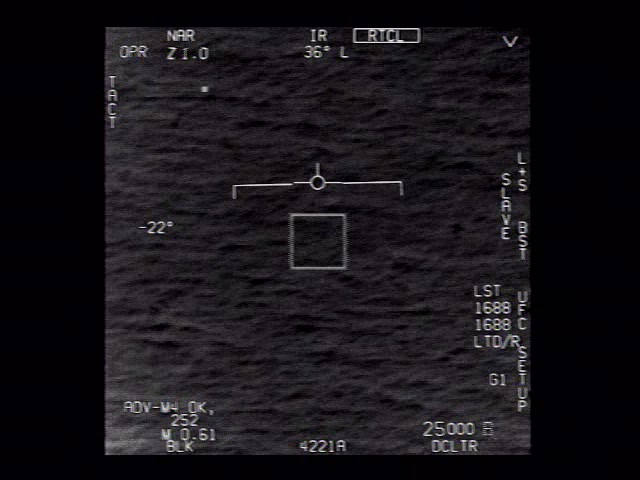
Footage captured in 2015 by an F/A-18F Super Hornet's ATFLIR pod off the U.S. East Coast, showing an object that appears to race extraordinarily fast and low over the Atlantic Ocean. One of the three U.S. Navy UAP videos declassified on 27 April 2020. The subject of Mick West's altitude-and-parallax-compression skeptical analysis.
status history (1)
Notable & intriguing
-
The GoFast video is a 35-second IR clip captured in 2015 by the ATFLIR pod of an F/A-18F Super Hornet off the U.S. East Coast, during the same operational period as the Roosevelt East Coast UAP encounters. Officially declassified by the U.S. Navy on 27 April 2020 along with the Gimbal video and FLIR1.
U.S. Department of Defense press release, 27 April 2020; The New York Times, December 2017
-
The pilots’ voice-over on the released clip includes the exclamation ‘Whoa, got it! Woooo! What the [expletive] is that thing?’ and a crew discussion about whether the object is ‘going against the wind’; the contemporaneous reaction is on the public record.
GoFast video audio track, U.S. Navy declassified release, 27 April 2020
-
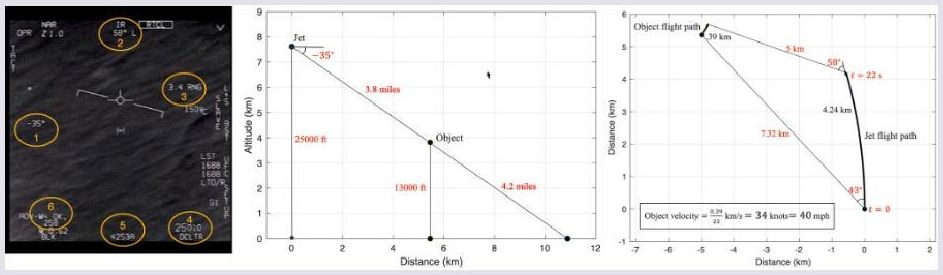
Mick West has published a detailed skeptical analysis arguing the object is an ordinary aircraft at altitude (~13,000 feet), with the apparent low altitude and high speed produced by parallax compression. The HUD-overlay numerics visible in the released clip — target range ~3.3 nm, target altitude ~13,000 feet — are West’s technical anchor.
Mick West, Metabunk thread ‘GoFast,’ 2020 (metabunk.org); Mick West, Escaping the Rabbit Hole, Skyhorse, 2018
-
Lt. Ryan Graves (figure-graves), the Roosevelt-deployment F/A-18F pilot who has most extensively spoken publicly about that period’s encounters, has testified that GoFast-class encounters were routine in 2014–15 East Coast operations and that the altitude visible on the HUD is consistent with operational training airspace.
Lt. Ryan Graves, House Oversight Subcommittee testimony, 26 July 2023; Joe Rogan Experience interview, December 2019
Public-record items already documented about this subject. Folklore is labelled. Sources cited where the specificity warrants it.
More — incident
- "Rods" / "Skyfish" (the resolved photographic artifact)
- "Snippy" the Horse (September 1967)
- 'Oumuamua (1I/2017 U1)
- Aguadilla Incident (25 April 2013, Puerto Rico)
- Allagash Abduction (August 1976, Maine)
- Ariel School, Zimbabwe (16 September 1994)
- Battle of Los Angeles (24–25 February 1942)
- Betty and Barney Hill Abduction (19-20 September 1961)
- Billy Meier & the Plejaren Contacts (1975-)
- Bob Lazar & the S-4 / Area 51 Claims (1989)
- Cash–Landrum Incident (29 December 1980)
- Cerro Uritorco / Huella del Pajarillo — Capilla del Monte, Argentina (9 January 1986)
- Colares / Operacao Prato (1977-1978, Brazil)
- Coyne / Mansfield Army Helicopter Incident (18 October 1973)
- Crop Circles & the Bower-Chorley Hoax (1978-1991)
- Falcon Lake Incident (20 May 1967)
- Father Gill / Boianai Sighting (26-27 June 1959, Papua New Guinea)
- George Adamski & the Contactee Movement (1952-1965)
- Ghost Rockets (1946)
- Gimbal Video (January 2015)
- Heaven's Gate (March 1997)
- Japan Airlines Flight 1628 (17 November 1986)
- Jellyfish UAP (2018, Iraq)
- Joe Simonton's "Space Pancakes" — Eagle River, Wisconsin (18 April 1961)