USS Nimitz Tic-Tac Incident under-corroborated
Multi-day, multi-platform, multi-sensor encounter between F/A-18F
Super Hornets from the USS Nimitz Carrier Strike Group and an
unidentified object behaving in ways inconsistent with conventional
aerospace performance, recorded on radar, FLIR, and direct visual
observation by named professional military witnesses.
Of the corpus's 65 historical cases, Nimitz Tic-Tac is the most
documentary-complete modern phenomenology case. Four interpretive
theories invoke it (extraterrestrial, crypto-physicalist,
disclosure-imminence, AI / non-biological intelligence). Its
documentation includes named witnesses, official Navy
acknowledgment, multi-sensor records, and a chain of custody on
the FLIR video traceable to the 2017 New York Times release.
Timeline
2004-10-31_to_2004-11-13_approx
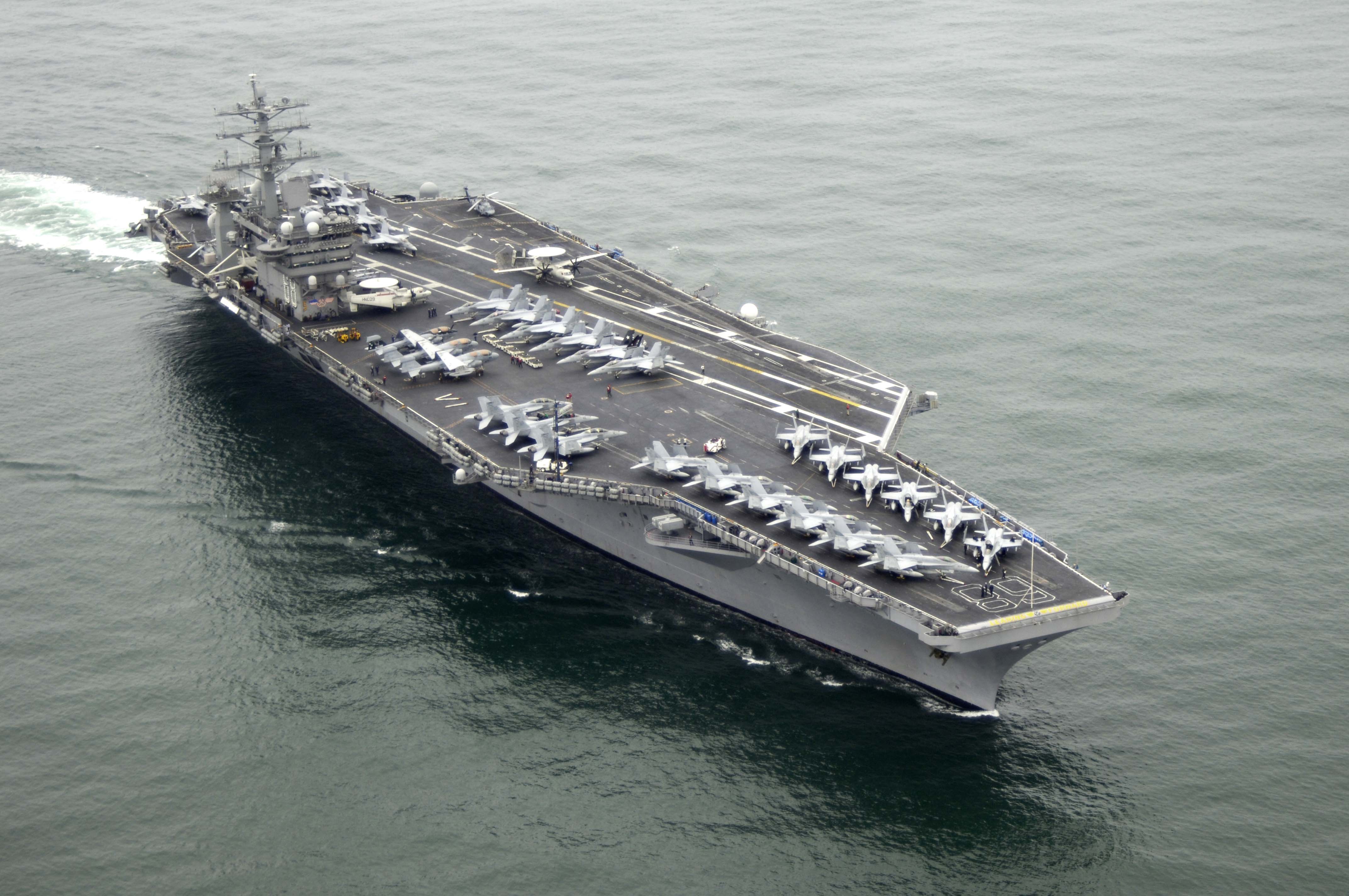
USS Princeton (CG-59) — the AEGIS-capable cruiser of the
Nimitz Carrier Strike Group — begins detecting unusual aerial
tracks on its SPY-1 radar. Tracks appear at approximately
80,000 feet, descend to approximately 20,000 feet at speeds
inconsistent with conventional aircraft, hover, then climb
again. The tracks persist intermittently across approximately
two weeks.
witnesses: Senior Chief Petty Officer Kevin Day (Princeton radar)
primary source: Kevin Day public interviews 2017-present
2004-11-14
Cdr. David Fravor (commanding officer of VFA-41 'Black Aces')
and Cdr. Alex Dietrich (wingman) are launched from the USS
Nimitz on a routine training intercept that is redirected by
the Princeton's air controllers to investigate the radar tracks.
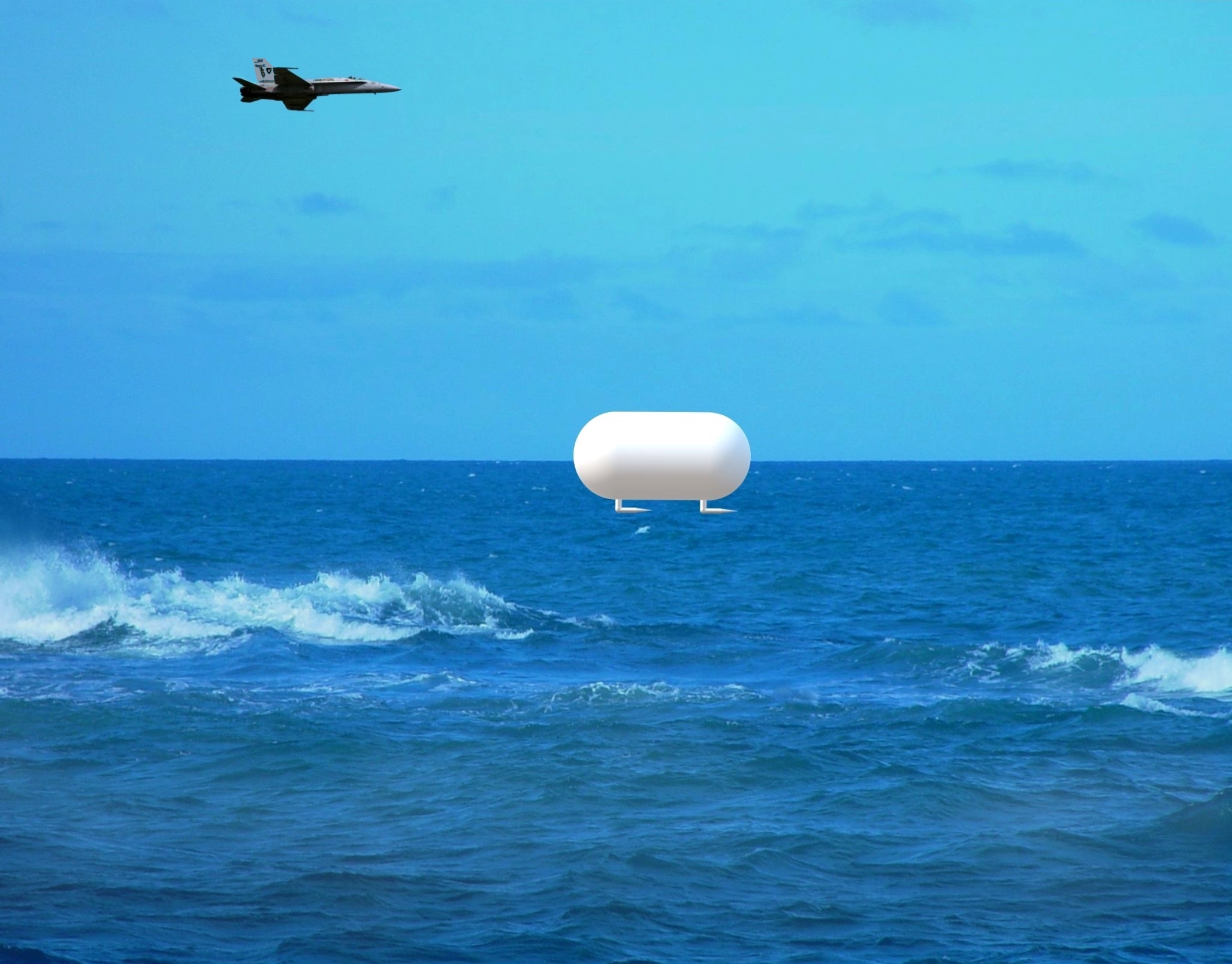
Fravor visually acquires a white, oval, approximately 40-foot
object hovering above a circular disturbance in the ocean
surface. He attempts to engage; the object accelerates away
at a rate Fravor later characterized in interviews as 'unlike
anything I have ever seen.'
witnesses: Cdr. David Fravor (VFA-41, pilot, lead intercept aircraft) · Cdr. Alex Dietrich (VFA-41, wingman pilot) · weapons systems officer in Dietrich's aircraft (name not in public record) · weapons systems officer in Fravor's aircraft (name not in public record)
primary source: Fravor and Dietrich on-record interviews 2017-2023
2004-11-14
Second flight launched from Nimitz, including Lt. Cdr. Chad
Underwood (WSO, F/A-18F equipped with ATFLIR — Advanced
Targeting Forward-Looking Infrared pod). Underwood does NOT
visually acquire the object (his pilot does not see it either)
but obtains a FLIR lock on a target consistent with the
Princeton's radar returns. The 76-second ATFLIR recording
Underwood produces is what later became known as the 'FLIR1'
or 'Tic Tac' video.
witnesses: Lt. Cdr. Chad Underwood (WSO, ATFLIR recording aircraft)
primary source: Underwood 2019 New York Magazine interview
2004-11-15_to_2004-11-16
Sensor tracks continue intermittently for the remainder of
the strike group's training exercise. The Princeton continues
to record sporadic returns at altitudes and speeds consistent
with the earlier tracks. No additional FLIR engagement occurs.
primary source: Princeton radar log references in Day interviews
2007_approx
A copy of the FLIR video appears on a UFO discussion forum
online. Chain of custody between Underwood's 2004 recording
and the 2007 forum post is not in the public record; the
video appears to have circulated within Navy and intelligence
community channels in the intervening period before leaking.
primary source: Wired Magazine retrospective
2017-12-16
The New York Times publishes 'Glowing Auras and 'Black Money':
The Pentagon's Mysterious U.F.O. Program' by Helene Cooper,
Ralph Blumenthal, and Leslie Kean. The article publishes the
Nimitz FLIR1 video alongside two other Navy ATFLIR videos
(Gimbal and GoFast, both from the 2014-2015 USS Theodore
Roosevelt period). The article also discloses the existence
of the Advanced Aerospace Threat Identification Program
(AATIP). Christopher Mellon, former Deputy Assistant Secretary
of Defense for Intelligence, is identified as one of the
sources who provided the videos to the journalists.
primary source: New York Times 16 December 2017
2019-09
Department of Defense spokesperson Sue Gough confirms to
journalists that the three videos published by the NYT are
authentic, were recorded by Navy aircrew, and depict objects
the Navy designates as 'unidentified aerial phenomena.' This
is the first official U.S. government acknowledgment of any
modern UAP video as authentic.
primary source: Sue Gough public statements to multiple outlets, Sep 2019
2020-04-27
The Pentagon formally releases the three videos (FLIR1, Gimbal,
GoFast) along with an official statement characterizing them
as 'unidentified aerial phenomena.' This is the U.S.
government's most formal acknowledgment of the Nimitz incident
to date.
primary source: DoD official statement, 27 April 2020
2021-06-25
The Office of the Director of National Intelligence releases
its 'Preliminary Assessment: Unidentified Aerial Phenomena'
to Congress. The report covers 144 reported incidents from
2004 to 2021; the 2004 Nimitz incident is among them. The
report explicitly says the U.S. government cannot account
for the majority of the incidents and proposes five candidate
categories of explanation.
primary source: ODNI Preliminary Assessment 25 June 2021
Named personnel
- Cdr. David Fravor — Pilot, F/A-18F lead intercept aircraft, VFA-41 'Black Aces' rank at time: Commander · later: U.S. Naval Academy lecturer (post-retirement); regular on-record witness primary witness to: visual acquisition of the object
- Cdr. Alex Dietrich — Pilot, F/A-18F wingman aircraft, VFA-41 rank at time: Commander (then Lieutenant) · later: 60 Minutes interview May 2021; congressional testimony preparation primary witness to: visual confirmation of the object during Fravor's engagement
- Lt. Cdr. Chad Underwood — Weapons Systems Officer, F/A-18F ATFLIR-equipped aircraft (second flight) rank at time: Lieutenant Commander · later: 2019 New York Magazine interview; coined the 'Tic Tac' description primary witness to: the FLIR1 ATFLIR recording
- Senior Chief Petty Officer Kevin Day — AEGIS Radar Operations, USS Princeton (CG-59) rank at time: Senior Chief Petty Officer · later: Public witness; multiple on-record interviews primary witness to: the Princeton's two-week SPY-1 radar tracks
- Christopher Mellon — Source for the 2017 New York Times article rank at time: Former Deputy Assistant Secretary of Defense for Intelligence · later: Vocal advocate for UAP disclosure role: Surfaced the video to the public record
- Luis Elizondo — Former director, Advanced Aerospace Threat Identification Program (AATIP) rank at time: · later: Resigned October 2017 to surface UAP information publicly role: Surfaced the existence of AATIP, which had handled the Nimitz file
Sensor record
- AN/SPY-1 phased-array radar on USS Princeton (CG-59), Ticonderoga-class AEGIS cruiser tracked the object intermittently for approximately two weeks; altitudes from ~80,000 ft to ~20,000 ft; speeds inconsistent with conventional aircraft documentation: Princeton radar logs (classified at time; some details surfaced via Day interviews)
- AN/ASQ-228 ATFLIR (Advanced Targeting Forward-Looking Infrared) on F/A-18F Super Hornet flown by Underwood 76-second infrared recording of an object consistent with the Princeton's radar returns; the object exhibits the appearance the witnesses later described as 'Tic Tac' documentation: The video is the publicly-released FLIR1 footage
- AN/APG-73 (or APG-79) airborne radar on Fravor and Dietrich's F/A-18F aircraft Some radar information reportedly recorded; Fravor has stated his radar would not lock the object documentation: Limited public information
- Mark 1 eyeballs on Cdr. Fravor and Cdr. Dietrich's cockpits approximately 40-foot white oval object hovering above a circular ocean disturbance documentation: On-record witness testimony from both pilots, broadly consistent
Object — reported
shape
white, smooth, oval / Tic-Tac-shaped
size
approximately 40 feet long (Fravor estimate)
surface features
no visible wings, control surfaces, exhaust, or markings
observed behaviors
- stationary hover above a circular ocean disturbance
- ascent mirroring Fravor's descending spiral when he attempted to close (interpreted as response to his approach)
- rapid acceleration away — Fravor's much-quoted 'unlike anything I have ever seen'
- sudden disappearance from the engagement area
- re-acquisition by Princeton radar at the Capping point (the rendezvous point Fravor had been told to fly to) before he arrived there
- the 'capping point' observation — that the object appeared to know Fravor's pre-briefed rendezvous point — is the most quoted single anomaly of the incident
Theories that invoke this case (4)
The standard ETH reading. Object's reported performance
envelope is inconsistent with known terrestrial aerospace
capability; the most parsimonious exotic explanation if
one accepts the witnesses' accounts at face value.
The cautious reading. Some real material object was present;
its physics is not yet understood but does not require
species-level exotic claims; the case is treated as a
data point demanding further instrumentation rather than
a confirmed exotic event.
The institutional reading. The Nimitz case is the first
modern UAP incident to receive formal government
acknowledgment (2019, 2020) and is treated as evidence
that the U.S. government is currently moving through a
managed disclosure process.
The non-biological reading. The object's responsive behavior
(mirroring Fravor's spiral, anticipating the capping point)
is consistent with intelligent control; the absence of any
visible biological-craft features (cockpit, life support
provisions) is consistent with autonomous operation.
Theories that do NOT invoke this case — and why
the case has no reported phenomenology (poltergeist activity, witness disorientation, etc.) typically associated with the interdimensional framing
no time-displacement narrative; no causality anomalies reported
no entity sighting; pure aerial-phenomenon case
multi-sensor multi-witness multi-platform record makes psychosocial reading hard to sustain; the Princeton's radar is not subject to mass-hysteria explanation
Conventional explanations advanced — and their status
FLIR1 video = distant, defocused aircraft + camera artifacts (zoom + tracking drift)
proponents: Mick West / Metabunk
Strong, and re-weighted UP on 2026 re-audit: the dramatic 'speed-up' coincides with a 1x→2x FOV change (corrected for zoom, there is no real acceleration); the lateral drift is camera-lock drift before track loss. Crucially the FLIR1 clip was shot by a SECOND flight (Underwood) that never had visual contact — it is not the famous Fravor engagement — and even West limits his claim: 'I don't know what David Fravor saw... but it's not what's shown in this video.' The video is the case's weakest link, not its anchor.
Range-gate / SPY-1 radar artifact for the '80,000 ft' drops
proponents: Peter Miller (tgof137) · skeptics
The near-instant 80kft→sea-level tracks are characteristic of SPY-1 range-gate pull/system error; the leaked summary report states there was NO radar jamming, contradicting the witness interviews. The raw Princeton radar logs are unreleased and, per AARO, were not preserved — so the radar↔visual correlation itself rests on testimony, not a recorded scope.
The 'CAP-point anticipation' = two separate returns, not one object teleporting
proponents: Peter Miller
Early radar accounts describe MULTIPLE objects; two separate returns ~60 mi apart is the mundane reading of the 'it knew the rendezvous point' claim, which otherwise requires a single object to jump 60 miles instantly.
Post-hoc / internally-contradictory testimony
proponents: Robert Sheaffer · the re-audit
The exotic-performance core was reconstructed in 2017+ interviews, 13+ years after 2004, and the witnesses materially disagree (Dietrich: object on her left, ~10 s, a 'long cylinder' in the water; Fravor: a cross-shaped disturbance, ~5 min; Kurth saw the disturbance but NOT the Tic Tac). Fravor himself dismisses fellow witness Kevin Day's more extreme claims — undercutting the unified narrative.
Foreign adversary technology (Chinese or Russian advanced UAV)
proponents: Sen. Marco Rubio (in committee testimony) · Adm. Gary Roughead
Cited by U.S. military officials in framing of the incident. Counter-argument is that the performance envelope reported (80kft to 20kft in seconds; the 'capping point' anticipation) is not known to be achievable by Chinese or Russian platforms either — but that performance is itself testimony-derived, not instrumented.
Foreign adversary technology (Chinese or Russian advanced UAV)
proponents: Sen. Marco Rubio (in committee testimony) · Adm. Gary Roughead
Cited by U.S. military officials in framing of the incident. Counter-argument is that the performance envelope reported (80kft to 20kft in seconds; the 'capping point' anticipation) is not known to be achievable by Chinese or Russian platforms either.
Electronic warfare / radar spoofing
proponents: Jeff Wise (Popular Mechanics)
Does not address the visual observation by Fravor and Dietrich. Would require electronic spoofing of the radar AND coincidental visual stimuli at the same coordinates.
Optical illusion / misidentification of a balloon, plane, or atmospheric optics
proponents: various skeptics
Inconsistent with the duration of the observation, the reported behaviors (capping-point anticipation), and the multi-sensor confirmation.
Where further investigation has leverage
- Independent expert analysis of the Princeton SPY-1 radar logs, which to the corpus's knowledge have not been publicly released in raw form.
- Full technical analysis of the FLIR1 video by an independent laboratory not in the Mick-West-vs-supporters dispute; ideally an academic optical-physics group.
- Public release of any communications between USS Princeton, USS Nimitz, and shore command during the engagement window; some such communications were reportedly logged.
- Identification and on-record testimony from the unnamed weapons systems officers in Fravor's and Dietrich's aircraft.
- Cross-correlation of the Nimitz tracks with FAA or U.S. Northern Command radar from the same period.
Corpus status
under-corroborated
Reclassified from phenomenologically-open to under-corroborated on a 2026 adversarial
re-audit, which separated two evidentiary objects the case had fused. The VIDEO (FLIR1)
is the weakest link and is substantially explained (West's zoom-transition + tracking
drift), and it was shot by a second flight that had NO visual contact — it is not the
Fravor object. The ENCOUNTER (Fravor/Dietrich visual, the Princeton SPY-1 tracks, the
descent and 'capping point') rests almost entirely on professional but post-hoc
testimony given 13+ years later, with documented inter-witness contradictions, while
the radar logs that would constitute genuine instrumented support are unreleased and,
per AARO, were not preserved. That is the textbook profile of under-corroborated —
impressive testimony with thin released hard data — not an instrumented-and-unresolved
case. Honest caveats: AARO/ODNI still list it 'unknown' (citing MISSING data, not a
positive prosaic ID), so 'unexplained' remains literally true; the robust core ('trained
observers saw an unidentified object') is real but is not instrumented corroboration of
the exotic-performance claims. The FLIR1 video specifically is best read as a
disputed-optical-artifact nested inside the under-corroborated encounter.
status history (2)
2026-06-09 · unannotated → phenomenologically-open
— annotated before the 2026-06-09 sweep; history begins at seeding
2026-06-14 · phenomenologically-open → under-corroborated
— adversarial re-audit of the strongest open instrumented cases — The exotic-performance core rests on professional but post-hoc, internally contradictory testimony given 13+ years later; the one public ins
Suggested watching
documentary · 2020 · Prime / Apple / various
The Phenomenon
The canonical filmed treatment, with Fravor, the strike group, and the FLIR1 footage in operational context.
episode · 2021 · CBS / Paramount+ / YouTube
60 Minutes — UAP segment
Whitaker interviews Fravor and Dietrich, May 16 2021.
interview · 2019 · Spotify / YouTube
Joe Rogan Experience #1361 — Commander David Fravor
Fravor unfiltered, before the 2021 ODNI report.
Threads of evidence
This case is one node in the connections that run across the record. It appears in 3 threads:
The radar-visual military lineage
— SPY-1 radar + ATFLIR + visual; the modern documentary keystone.
The transmedium thread
— Object hovering over a circular ocean disturbance; the modern transmedium icon.
The Leslie Kean disclosure nexus
— Surfaced in the 2017 NYT article Kean co-authored, which disclosed AATIP.