InvestigationProject SIGN (July 1947 – February 1949)
aka Project SIGN (July 1947 – February 1949)
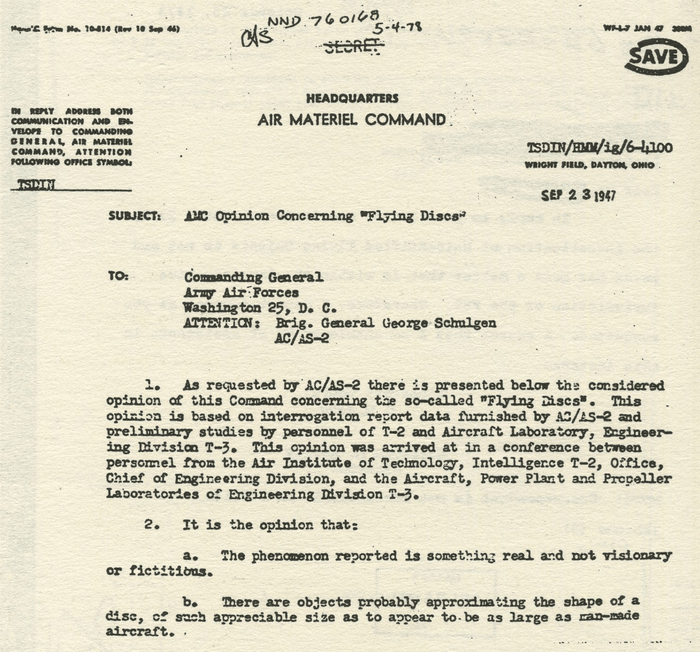
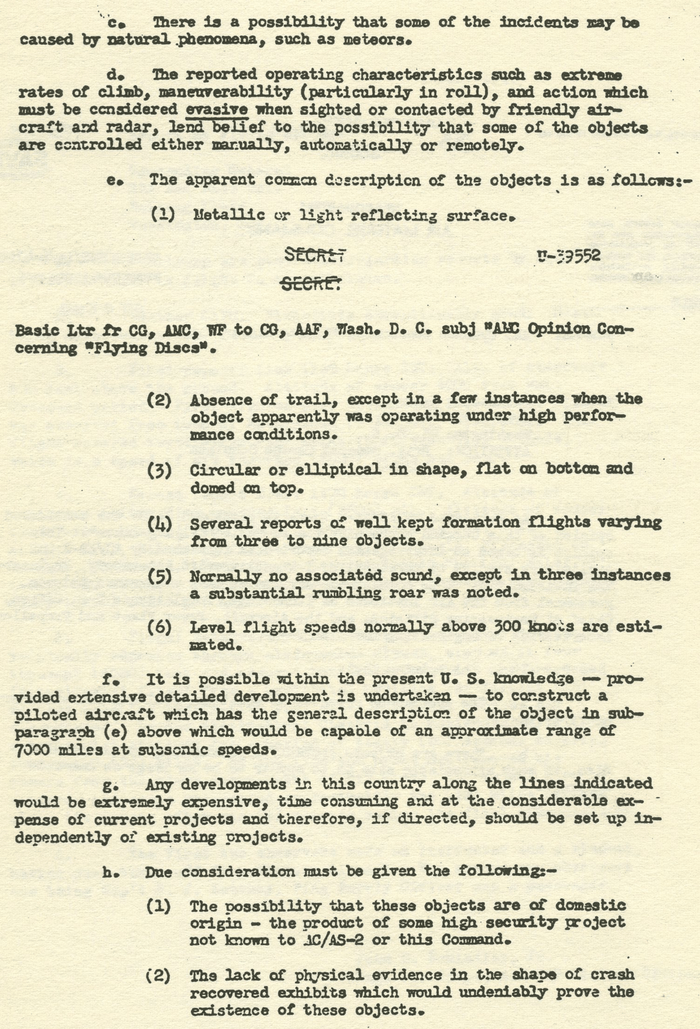
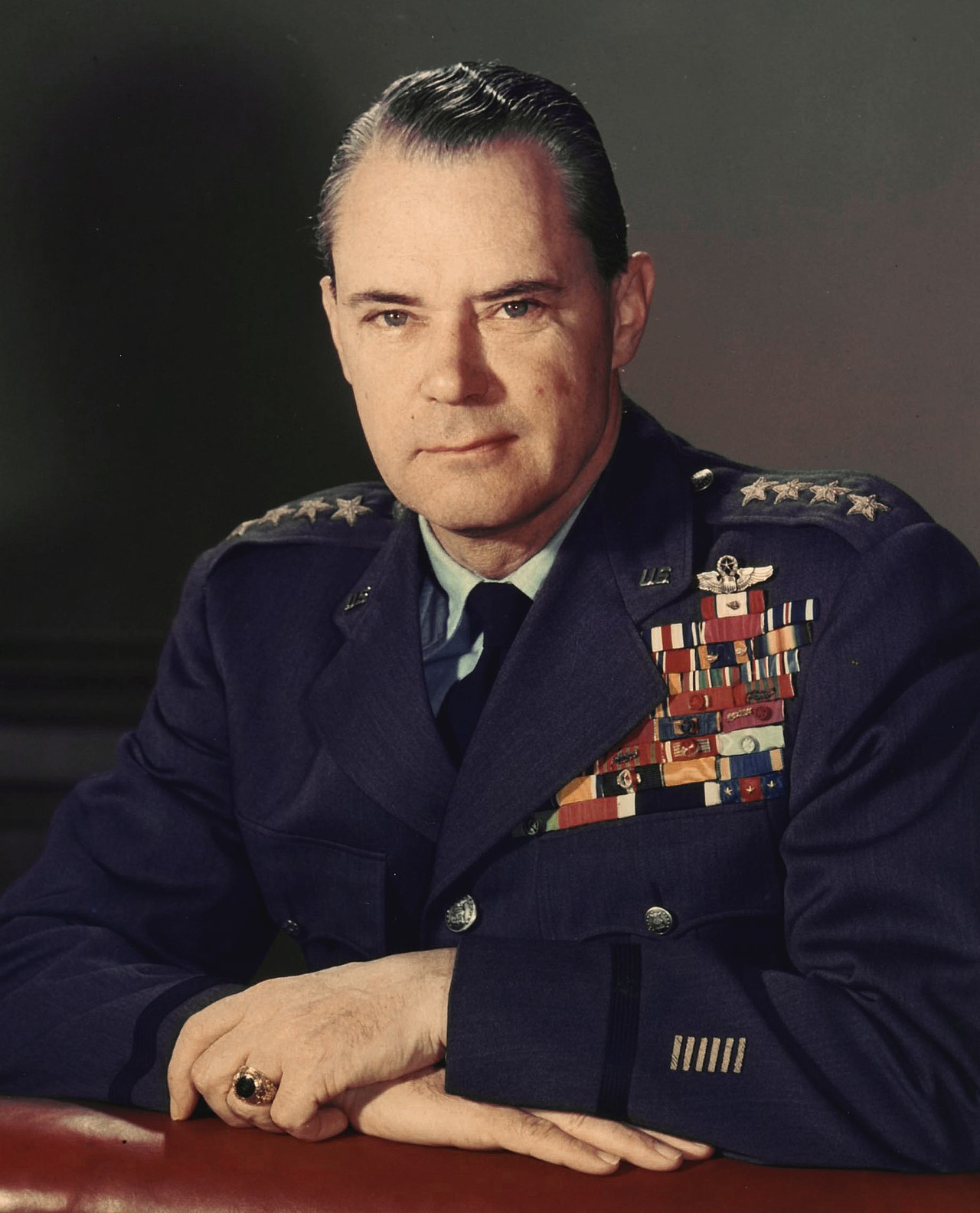
The USAF's first formal UFO investigation, opened at Air Materiel Command, Wright Field on 30 December 1947 in response to the post-Arnold sighting wave. Operated under the codename SIGN through February 1949; produced the 'Estimate of the Situation' staff study reportedly concluding the objects were interplanetary. The Estimate was rejected by Air Force Chief of Staff Gen. Hoyt Vandenberg; Project SIGN was reorganized into the more skeptical Project GRUDGE.
status history (1)
Notable & intriguing
-
Project SIGN was opened at the Air Materiel Command Technical Intelligence Division at Wright Field, Dayton, Ohio, on 30 December 1947 by directive of USAF Commanding General Nathan F. Twining, in response to the post-Arnold (24 June 1947) sighting wave.
Twining directive, 30 December 1947 (declassified); USAF Air Materiel Command Technical Intelligence Division records; Edward Ruppelt, The Report on Unidentified Flying Objects, 1956, ch. 3
-
SIGN’s primary product was the Top Secret ‘Estimate of the Situation,’ drafted in summer 1948 by senior project staff (Sneider, Loedding, with Hynek’s scientific consultation), reportedly concluding that the most reasonable explanation for the accumulated sighting corpus was ‘interplanetary’ origin. The Estimate was rejected by USAF Chief of Staff Gen. Hoyt Vandenberg and ordered destroyed; no copy survives in the public record (see estimate-of-situation-1948).
Capt. Edward J. Ruppelt, The Report on Unidentified Flying Objects, Doubleday, 1956, ch. 3; AARO Historical Record Report Vol. 1, March 2024
-
Following Vandenberg’s rejection of the Estimate, Project SIGN was reorganized into the more skeptical Project GRUDGE in February 1949; SIGN’s final report (F-TR-2274-IA, February 1949) carried a substantially more skeptical conclusion than the rejected Estimate.
Project SIGN Final Report F-TR-2274-IA, February 1949, declassified 1961; Edward Ruppelt, The Report on Unidentified Flying Objects, 1956, ch. 3–4
Public-record items already documented about this subject. Folklore is labelled. Sources cited where the specificity warrants it.
Appears in interpretive theories
- Apparatus-response theories — cites as evidence
More — investigation
- AARO (2022–present)
- AAWSAP / AATIP (2007–2012)
- Airborne Object Identification and Management Synchronization Group / AOIMSG (November 2021 – July 2022)
- COMETA Report (1999, France)
- Condon Committee Report (1968)
- GEPAN → SEPRA → GEIPAN (1977–present, France)
- NASA UAP Independent Study Team final report (14 September 2023)
- Project Blue Book Special Report No. 14 (1955)
- Project Condign — the UK MoD secret UAP study (1997-2000, released 2006)
- Project GRUDGE (February 1949 – March 1952)
- Project Sign → Grudge → Blue Book (1947–1969)
- Project Stargate (1972–1995)
- Robertson Panel (14–17 January 1953)
- Sturrock Panel (29 September – 4 October 1998)
- The Pentacle Memorandum (9 January 1953)